Your Body May Soon Get a Working New Heart
Imagine a replacement heart muscle that mimics your own, beating and twisting like the real thing without needing animal models. This discovery could completely change how we test and develop treatments for heart disease.
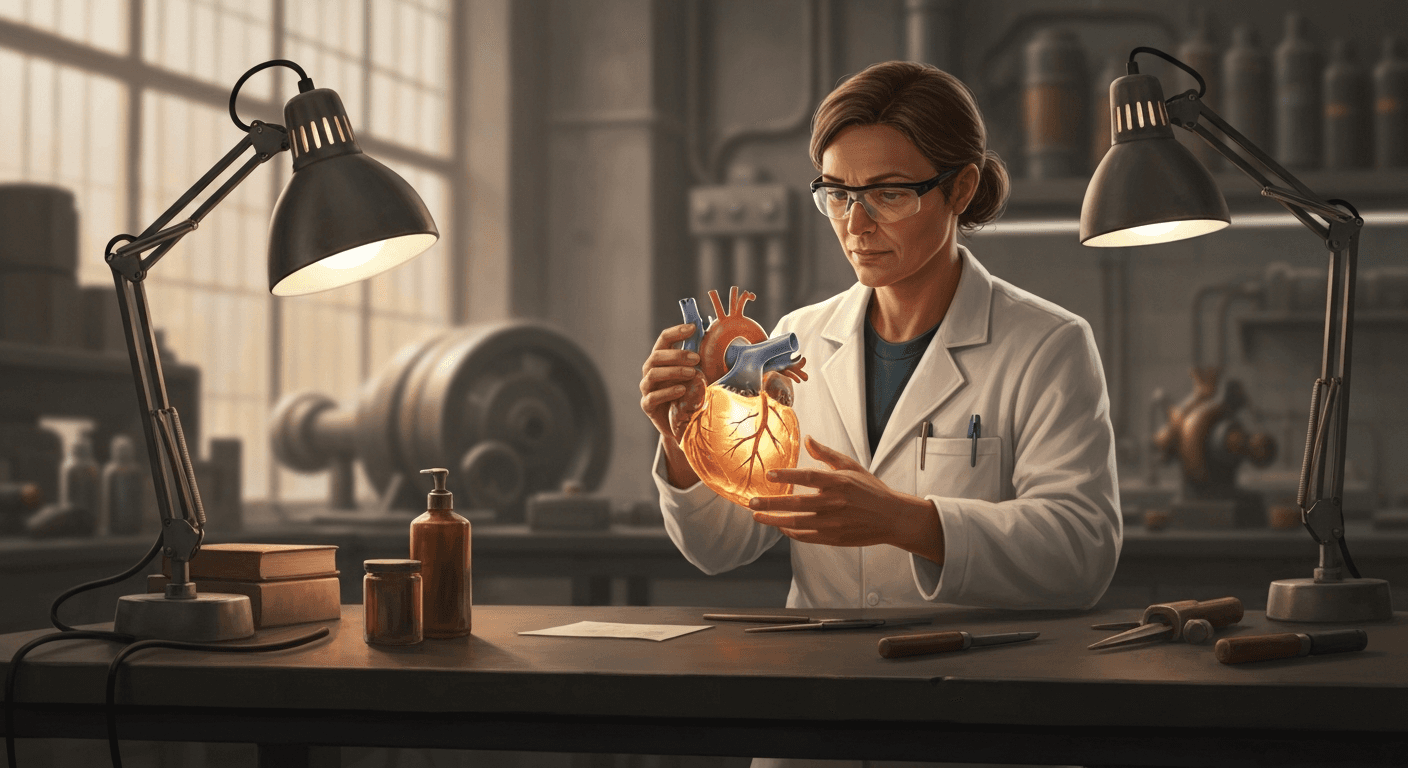
The idea of a machine that perfectly copies your heart's actions might sound like something from a movie, but it’s becoming very real. What if doctors could test new heart medicines or even practice complex surgeries on a machine that behaves exactly like a living human heart, right down to its subtle twisting motion? This isn't a distant dream; scientists are making tangible progress toward creating sophisticated heart simulators that could redefine cardiovascular care.
This isn't sci-fi. Here's the real peer-reviewed evidence. Researchers from institutions like the one whose work was published via OpenAlex have been developing a device that simulates the left ventricle – the main pumping chamber of your heart – using artificial muscles. Led by researchers like those involved in this methodological development, their work focuses on replicating the intricate mechanics of heartbeats outside the body. This approach sidesteps ethical concerns with animal testing and limitations of existing complex systems.
Why a Beating Model Changes Everything
Creating a realistic heart model is crucial because your heart doesn't just squeeze like a balloon; it also twists as it pumps blood. This twisting motion, known as "ventricular torsion," is essential for efficient blood ejection. If you think of wringing out a wet towel, you don't just push from the ends; you twist it to get the most water out. Your heart does something similar, twisting to push blood out with maximum force. Current models often miss this subtle yet vital detail, which means they can't fully capture how a real heart works under stress or disease.
The team's ingenious solution involves using what they call "pneumatic artificial muscles" – essentially tiny balloons or bladders that expand and contract with air pressure, like the muscles in your arm when you flex. These artificial muscles are arranged around a latex rubber chamber, which acts as the heart's pumping wall. It's a bit like a chef who, instead of just pushing dough, carefully shapes and twists it to get the perfect pastry; the artificial muscles mimic the natural twisting and squeezing action of real heart tissue. This design allows the simulator to not only beat but also twist at the apex (the bottom tip) by a significant 21 degrees, mirroring an actual human heart.
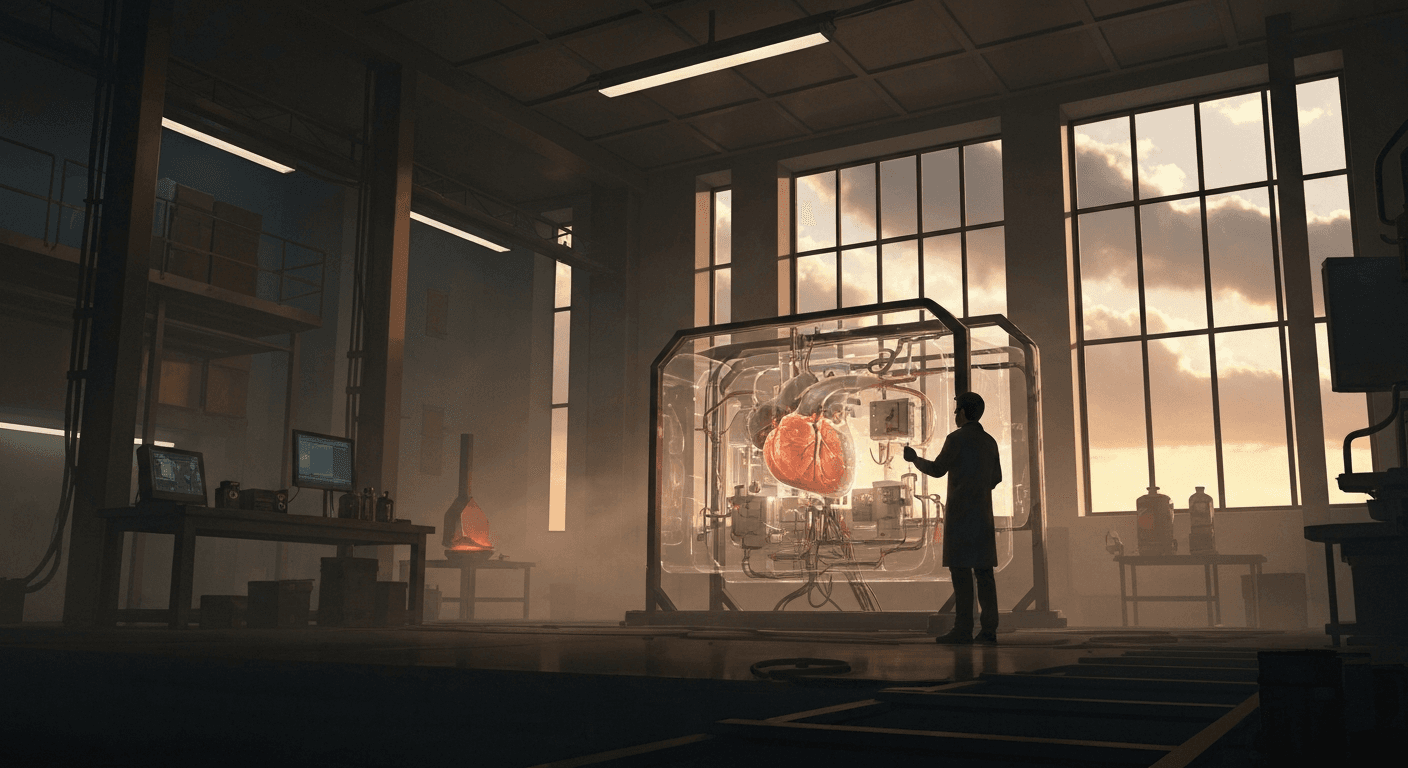
Simulating Sickness and Health
The real marvel of this simulator is its ability to imitate both healthy and diseased heart conditions. By adjusting the air pressure and timing, the researchers can make the artificial ventricle pump like a healthy heart, generating average flow rates of up to 2.25 liters per minute – impressive for a prototype. More importantly, they can also simulate how a heart might struggle under certain conditions, such as weakened muscles or valve problems, simply by changing the parameters. This means doctors could, in theory, explore how different medicines or surgical techniques affect a diseased heart without any risk to a patient.
One surprising fact: the simulator achieves an 11 mm apex shortening, which is how much the tip of your heart pulls inwards during a beat. This tiny movement is a key indicator of cardiac health and performance, showing just how detailed this simulation is. Imagine using this to refine the low-cost printer building living heart tissue, combining synthetic function with biological form.
What it Takes to Get There
Of course, this is still an early platform. Skeptics might point out that replicating the complex biochemical environment and electrical signaling of a living heart is still a huge challenge. While the mechanical action is impressive, a real heart is a living organ, not just a pump. Researchers would need to prove that these simulators can accurately predict how human hearts respond to a vast array of medications, genetic conditions, and surgical interventions. This will require extensive validation against real clinical data, and possibly integrating bio-sensors that mimic the subtle electrical impulses of a live heart. Sound waves may soon change your brain as therapies, and similar non-invasive methods could be vital for analyzing these simulators.
If this technology reaches its full potential, the second-order effects would be enormous. The time and cost of bringing new heart medications to market could drop significantly. Instead of years of animal trials, companies could test compounds on these sophisticated simulators. Medical students could practice complex heart surgeries on incredibly lifelike models, refining their skills without risk. This could even lead to more personalized medicine, where a simulator is custom-tuned to a patient's specific condition, allowing doctors to predict the best course of treatment for how your body's army fights hidden sickness or injury. It brings us closer to a future where medical science is both deeply personal and globally accessible.
This new left ventricular simulator, while preliminary, offers a fascinating glimpse into a future where our understanding and treatment of heart disease could be transformed. It demonstrates that the path to mimicking life's most complex mechanics is often paved with simple, elegant solutions, showing the true wonder of scientific endeavor.
Key Takeaways
- Scientists have developed a heart simulator that accurately mimics the complex twisting and pumping action of a human left ventricle using artificial muscles.
- This device can simulate both healthy and diseased heart conditions, offering a crucial ethical alternative to animal testing for new treatments.
- The technology could dramatically accelerate drug development, improve surgical training, and enable more personalized medicine for heart patients in the future.
Frequently Asked Questions
What is a left ventricular simulator? It's a machine that copies the main pumping chamber of your heart, the left ventricle, using artificial muscles to mimic its beating and twisting motions, helping researchers study heart function.
How does this simulator work? It uses pneumatic artificial muscles, which inflate and deflate with air pressure, arranged around a latex chamber. This creates a realistic squeeze and twist, much like a real human heart.
Why is this heart simulator important? It provides a safe, ethical way to test new heart treatments and medicines, allowing scientists to simulate both healthy and diseased heart conditions without needing animal models.
Editorial note: The scientific findings presented in this article are sourced exclusively from published research papers, peer-reviewed studies, certified inventions, and registered patent filings. Images generated by AI.
Stay ahead of the curve
The science that shapes tomorrow — in your inbox every week
The scientific findings presented in our articles are sourced from published research papers, peer-reviewed studies, certified inventions, and registered patent filings. Subscribe for focused weekly coverage, hands-on explainers, and practical insights that help you stay curious — no jargon, no noise.
By subscribing, you agree to receive newsletter and marketing emails, and accept our Terms of Use and Privacy Policy. You can unsubscribe anytime.
Battery Materials, Energy Storage Chemistry & Electric Vehicle Technology
Battery materials journalist covering the chemistry behind the electric revolution — and why the next decade of progress depends on what's inside the cell, not outside it.
View full profile →