The Low-Cost Printer Building Living Heart Tissue
Heart disease is often called a silent killer — one that's hard to study up close. A low-cost 3D bioprinter can now build real heart tissue, opening the door to better disease screening and personalized treatment.
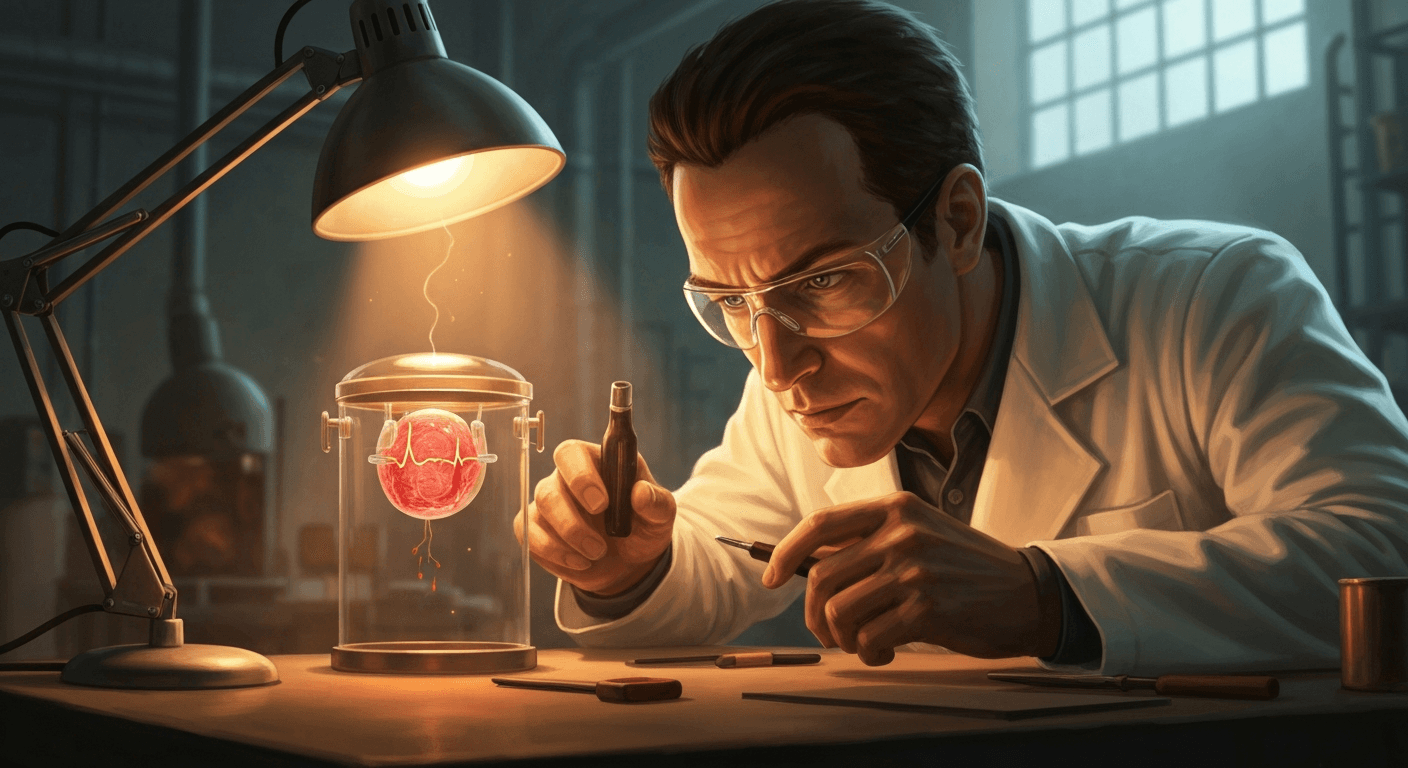
Heart disease is still the leading cause of death globally, but what if doctors could simply print tiny, working pieces of your heart to test drugs and understand your specific condition? This isn't some far-off fantasy from a sci-fi movie. Scientists are actually doing it right now, creating miniature heart tissues in the lab to help personalize your future healthcare.
This isn't sci-fi. Here's the real peer-reviewed evidence: A team led by Dr. Daniel Kelly and his colleagues at the University of Dublin’s Trinity College, published their findings on developing an engineered heart tissue model. They showcased a clever way to turn a regular desktop 3D printer into a "bioprinter," capable of precisely assembling living cells into functional tissues.
Your Heart Cells Can Be Printed Like Tiny Bricks
This process works a bit like how a bricklayer builds a wall, but instead of bricks, we're talking about living cells and a special biological "ink." The researchers took a standard desktop 3D printer, the kind that squirts out plastic, and replaced its plastic nozzle with syringe pumps. These pumps then push out a special "bioink" made from materials like alginate and fibrinogen, which are like biological gels.
This bioink holds induced pluripotent stem cells (iPSCs) that have been coaxed into becoming cardiomyocytes—your actual heart muscle cells. Think of these iPSCs as blank slates that can turn into any cell type, and here, they're becoming the beating cells of your heart. The printer then layers these cells precisely, guided by a computer, much like how a sculptor builds up clay to form a shape.
The printer achieves incredible accuracy, placing cells within ±40 micrometers, which is thinner than a human hair. This precision is vital for creating tissues that behave like real heart muscle, allowing scientists to study how different conditions or drugs affect individual cells and the tissue as a whole. One surprising fact: these printed tissues maintained over 90% cell viability for more than two weeks, demonstrating their robustness.
Why a Simple Printer Can Unlock Complex Heart Secrets
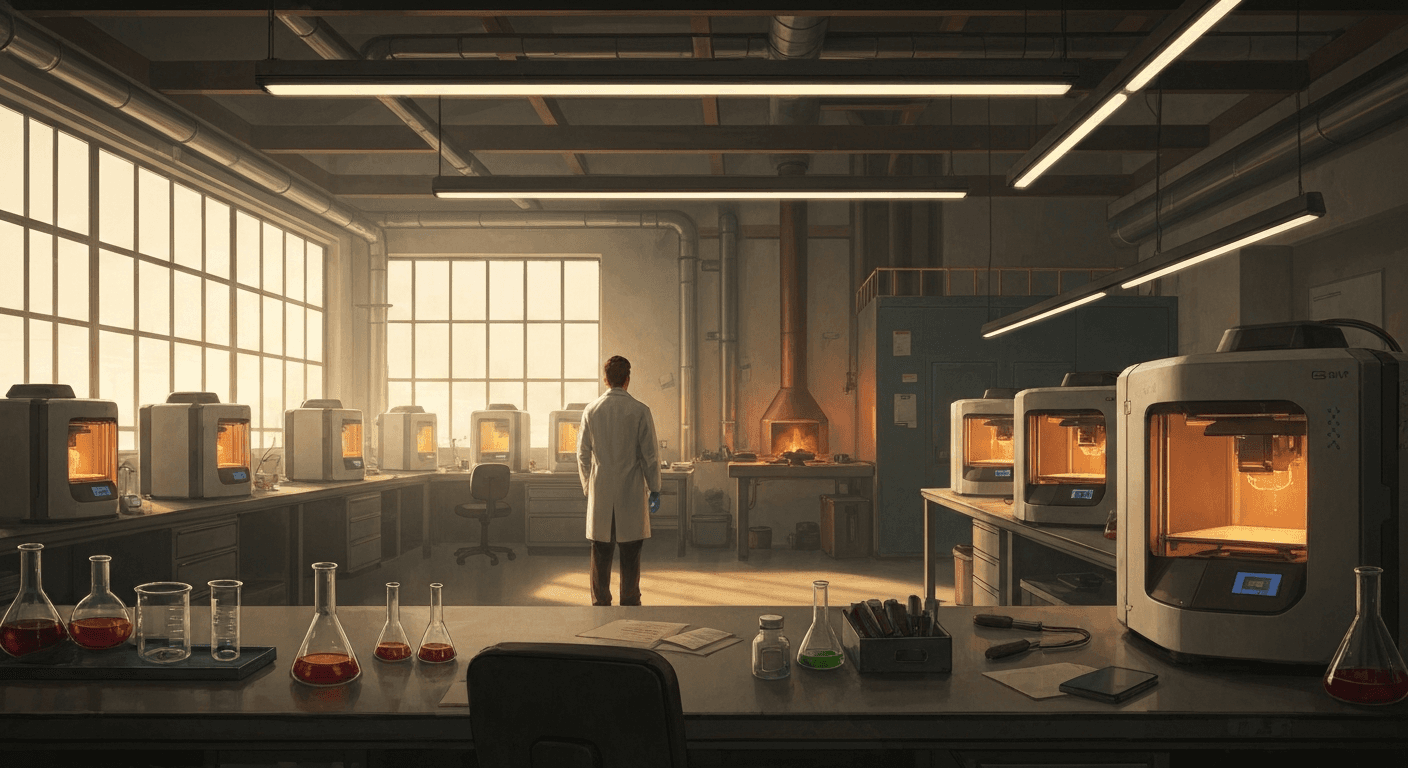
You might wonder why a low-cost printer matters when fancy lab equipment exists. The brilliance here is accessibility. By using off-the-shelf components, this approach drastically lowers the entry barrier for labs worldwide to create and study these heart tissues. This means more scientists can research heart disease, potentially speeding up discoveries.
These printed tissues are more consistent than manually created ones. Imagine trying to build identical LEGO structures by hand versus using a precise machine—the machine will always be more uniform. This uniformity helps reduce "batch-to-batch variation," meaning results from different experiments are more reliable. This is crucial for things like drug screening, where you need to be sure any observed effects are from the drug, not from differences in your tissue samples.
The process also involves a clever trick: the bioink contains alginate, which is then dissolved away with a chemical called EDTA, leaving behind only the packed, functional heart cells. This compaction helps the cells align and start beating spontaneously, just like real heart tissue. This allows researchers to measure things like contractile force (how strongly the tissue beats) and electrophysiology (its electrical signals).
What This Means for Your Future Health
If this technology becomes widespread, it changes everything about how we test new heart medications. Instead of relying solely on animal models or human trials much later, researchers could first test drugs on these tiny printed heart tissues, customized to mimic a patient's specific heart condition. This could lead to far more effective and personalized therapies, tailored to your unique biology.
Think about it: if you have a specific genetic predisposition to a heart condition, a small sample of your cells could be turned into iPSCs, then printed into your very own "heart-on-a-chip." Doctors could then test various drugs on your specific tissue, seeing which works best for you, without you ever taking the drug. This is the essence of personalized medicine, moving beyond a one-size-fits-all approach.
This technology also provides an invaluable tool for understanding complex heart diseases that are difficult to study in living people. Researchers can induce specific disease conditions in these printed tissues, watching how they develop and respond. While fully functional organs for transplant are still likely 10-15 years away, this step lays crucial groundwork for larger, more complex tissue engineering, bringing us closer to a future where your body can finally grow new bone or even new organs.
The Road Ahead: Making it Even Better
Of course, there are still challenges. While these tissues are good, they don't perfectly mimic an adult human heart. For example, their electrical signals (action potentials) are slightly different, and the internal structure, called sarcomere alignment, isn't yet perfect. This means the cells don't line up quite as neatly as they do in a mature heart, which can affect their contractile force.
However, the researchers are actively exploring how the printing process itself might influence these structures, aiming to refine the technique further. The goal is to make these lab-grown hearts even more physiologically accurate, bridging the gap between a printed tissue and a perfectly functioning human organ. This iterative refinement is how science progresses, constantly pushing the boundaries of what's possible.
This development is a remarkable testament to human ingenuity. By democratizing access to complex biological models, we're not just printing tissue; we're printing hope for millions suffering from heart disease, moving towards a future where your doctor may soon see future sickness earlier and offer more targeted treatments.
Key Takeaways
- A low-cost 3D bioprinter can accurately create functional human heart tissues from stem cells, enabling wider research.
- These printed tissues offer a consistent platform for rapid drug screening and personalized therapy development for heart conditions.
- While not ready for organ transplants, this advancement provides a crucial tool for understanding and combating cardiovascular disease.
Frequently Asked Questions
What is a 3D bioprinter? A 3D bioprinter is a device that layers biological materials, like cells and bioinks, to create three-dimensional living tissues or organs. It's essentially a specialized 3D printer for biological structures.
How does it create heart tissue? It uses syringe pumps to deposit bioink containing human heart cells (cardiomyocytes) in precise patterns. A special gel in the bioink is later dissolved, leaving compacted, functional heart muscle tissue behind.
Why is this important for heart disease? These printed tissues offer a consistent, accurate model to study heart diseases and test drugs. This allows for personalized therapy development and helps researchers understand disease mechanisms without human trials.
Is this technology ready for human transplants? Not yet. While a significant step, fully functional organs for transplant are still years away, likely 10-15 years. This research focuses on drug screening and disease modeling, not immediate transplantation.
Editorial note: The scientific findings presented in this article are sourced exclusively from published research papers, peer-reviewed studies, certified inventions, and registered patent filings. Images generated by AI.
Stay ahead of the curve
The science that shapes tomorrow — in your inbox every week
The scientific findings presented in our articles are sourced from published research papers, peer-reviewed studies, certified inventions, and registered patent filings. Subscribe for focused weekly coverage, hands-on explainers, and practical insights that help you stay curious — no jargon, no noise.
By subscribing, you agree to receive newsletter and marketing emails, and accept our Terms of Use and Privacy Policy. You can unsubscribe anytime.
Battery Materials, Energy Storage Chemistry & Electric Vehicle Technology
Battery materials journalist covering the chemistry behind the electric revolution — and why the next decade of progress depends on what's inside the cell, not outside it.
View full profile →