Tiny Needles May Quietly Stop Skin Disease
Imagine a simple, painless patch that could treat a debilitating skin disease in your neighborhood, without costly hospital trips or damaging side effects. This new approach could bring powerful medicine directly to where it's needed, changing lives for millions.
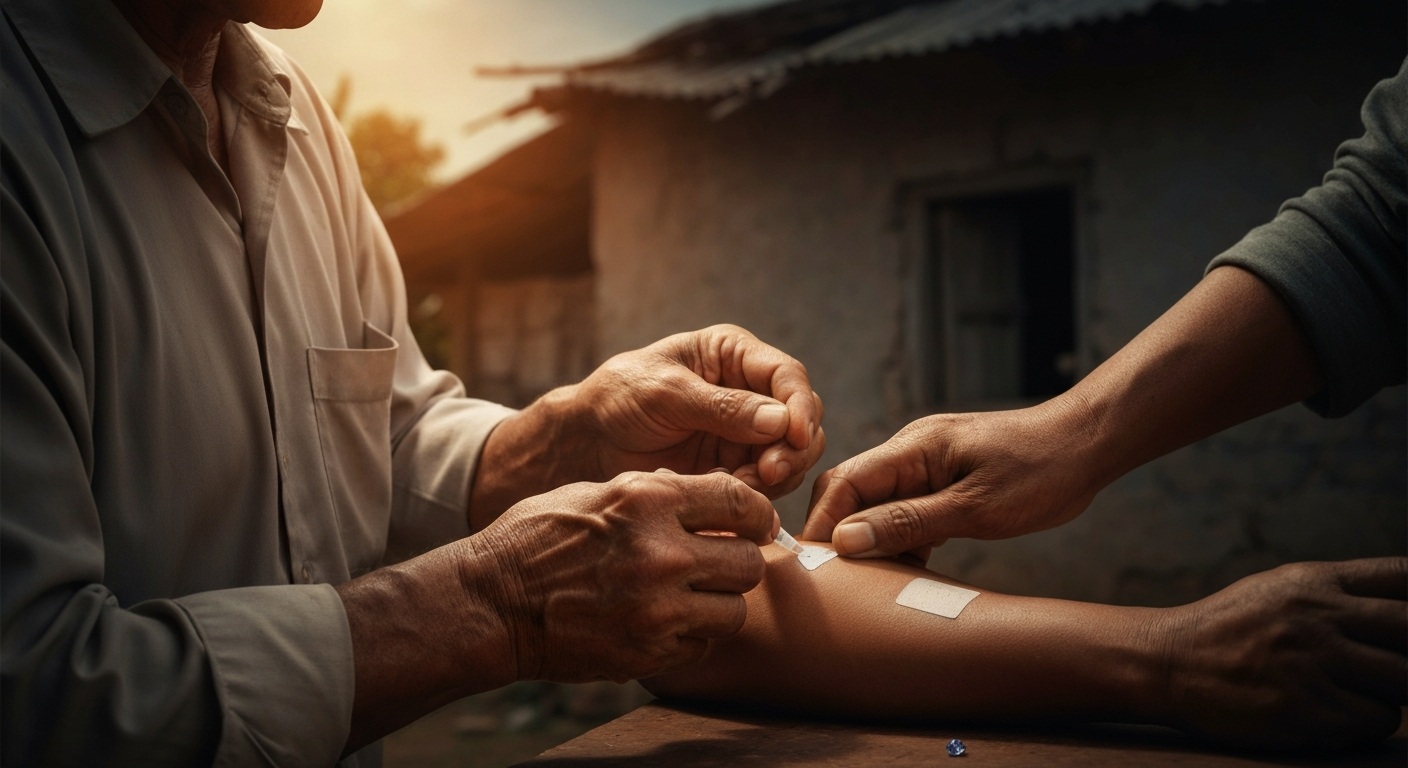
Imagine a world where a devastating skin disease, usually treated with tough, toxic drugs that require hospital visits, could be tackled right at home with a tiny, nearly invisible patch. You'd simply apply it, and the medicine would work its magic directly where it's needed, sparing your entire body from harsh chemicals. This isn't just a dream; it's becoming a real possibility.
This isn't sci-fi from a glossy magazine. Researchers from institutions like the University of Maryland and the University of Iowa have been quietly proving its potential, publishing their findings in the journal Micromachines. They're focusing on a terrible disease called American cutaneous leishmaniasis (CL), caused by a parasite, which often affects vulnerable communities.
Delivering Medicine Like a Tiny Sprinkler System
The problem with existing treatments for CL is that they use a powerful drug called Amphotericin B (AmB), which is effective but can seriously harm your kidneys and liver. Think of it like trying to water a single plant in your garden with a fire hose – you'll get the plant, but you'll also flood the entire garden. The medicine spreads throughout your body, causing side effects even in healthy areas.
To solve this, scientists are using something called microneedles – tiny, hollow needles so small they barely register when they touch your skin, like microscopic straws. Instead of injecting the drug into your bloodstream (like a regular shot), these microneedles act like a mini sprinkler system, delivering the medicine directly into the skin lesion itself, which is the infected area. This localized delivery means less drug is needed, and it doesn't travel through your entire body.
A Targeted Approach Shows Real Promise
In studies with mice infected with the Leishmania mexicana parasite (which models human CL), these microneedles showed really promising results. Mice treated for 20 days had their lesions—the sores on their skin—shrink by up to 2.8 millimeters more than those who got a placebo, essentially a fake treatment. Even a 10-day treatment limited growth. More importantly, weeks after the treatment stopped, the parasitic burden—the number of parasites in the tissue—was significantly reduced.
And here's the best part: the mice showed no signs of kidney damage, which is a major concern with standard AmB treatments. This suggests that the microneedle approach could offer a much safer way to use this potent drug. It’s like using a tiny, precise eyedropper for that single plant instead of the fire hose, protecting the rest of your garden.
Why This Matters So Much Beyond Just Skin Deep
This approach has huge implications, especially for diseases like CL that disproportionately affect poorer, remote communities. The current lipid formulations of AmB, while less toxic, are expensive and need to be kept cold, making them hard to get to people who need them most. Imagine trying to get ice to a village without electricity in the middle of a hot climate. Microneedles, on the other hand, offer an off-clinic drug delivery system – something that can be used outside of a hospital, perhaps even by community health workers. This could drastically reduce the need for patients to travel long distances to urban hospitals, which is often a major barrier to care.
One surprising fact about leishmaniasis is that it's actually spread by the bite of infected sandflies, not mosquitoes, affecting millions globally. This simple, easy-to-use patch could make a powerful, FDA-approved drug finally accessible to those who need it most, without the crippling side effects or logistical nightmares. It could empower communities to take control of their health in a way that just wasn't possible before.
What's Next for This Tiny Technology?
Of course, mouse studies are just the first step. The next challenge is to move into human trials to confirm these promising results for people. Scientists will need to ensure the microneedles are just as effective and safe in human skin and that patients find them easy to use. While this technology isn't hitting pharmacies tomorrow, the pathway is clear, and we could see these in broader use within 5-10 years, especially if regulatory approvals move efficiently.
This isn't just about treating a single disease; it’s a peek into a future where medicine is more precise, less invasive, and more accessible. It shows how simple innovations, like a tiny array of needles, can open up incredible possibilities for global health, potentially changing how we think about delivering many different kinds of treatments. This same principle of targeted delivery could potentially be applied to other skin conditions or even how your body's 'glue' may finally stop cancer.
Key Takeaways
- Microneedles can deliver potent drugs directly into skin lesions, preventing systemic side effects.
- This targeted approach significantly reduces parasite burden in leishmaniasis without causing kidney damage.
- The technology promises a more accessible, off-clinic treatment option for diseases in underserved communities.
Frequently Asked Questions
What is a microneedle patch? A microneedle patch is a small patch containing tiny, hollow needles that are just millimeters long. They can deliver medicine directly into the skin without causing pain, avoiding traditional injections or pills.
How does this new treatment for leishmaniasis work? It delivers a potent drug, Amphotericin B, directly into the skin lesions using microneedles. This targeted approach limits the drug's spread throughout the body, reducing severe side effects while effectively killing the parasites.
Why is this microneedle approach important? This method makes a powerful drug safer and more accessible, especially for remote communities. It could eliminate the need for costly hospital visits and cold-chain storage, making treatment feasible for millions who currently lack access.
Editorial note: The scientific findings presented in this article are sourced exclusively from published research papers, peer-reviewed studies, certified inventions, and registered patent filings. Images generated by AI.
Stay ahead of the curve
The science that shapes tomorrow — in your inbox every week
The scientific findings presented in our articles are sourced from published research papers, peer-reviewed studies, certified inventions, and registered patent filings. Subscribe for focused weekly coverage, hands-on explainers, and practical insights that help you stay curious — no jargon, no noise.
By subscribing, you agree to receive newsletter and marketing emails, and accept our Terms of Use and Privacy Policy. You can unsubscribe anytime.
Bio-inspired Materials, Biomimetics & Green Material Design
Biomimetics journalist exploring the remarkable materials scientists are designing by studying — and copying — the natural world.
View full profile →