The Simple Rock That Locks Away Heat
Imagine a world where your home stays warm in winter and cool in summer without cranking the thermostat. Scientists have found a new kind of crystal that can do exactly that, offering surprising energy savings.

What if your home could naturally block out extreme temperatures, staying perfectly comfortable year-round without massive energy bills? Imagine insulation so effective it feels like wrapping your house in a blanket woven from pure silence, where heat simply cannot pass through. This isn't just a comfort fantasy; it's a future that's becoming incredibly real, thanks to a surprising discovery in the world of crystals.
This isn't sci-fi; it’s solid, peer-reviewed science. Researchers at the University of California, Berkeley, and the Lawrence Berkeley National Laboratory have made a significant leap. Led by scientists like Liheng Wu and Mark Asta, their work, detailed in a recent preprint on arXiv, describes a material with properties so unique, it’s like discovering a super-shield for heat. They're finding ways to dramatically slow down heat's relentless march.
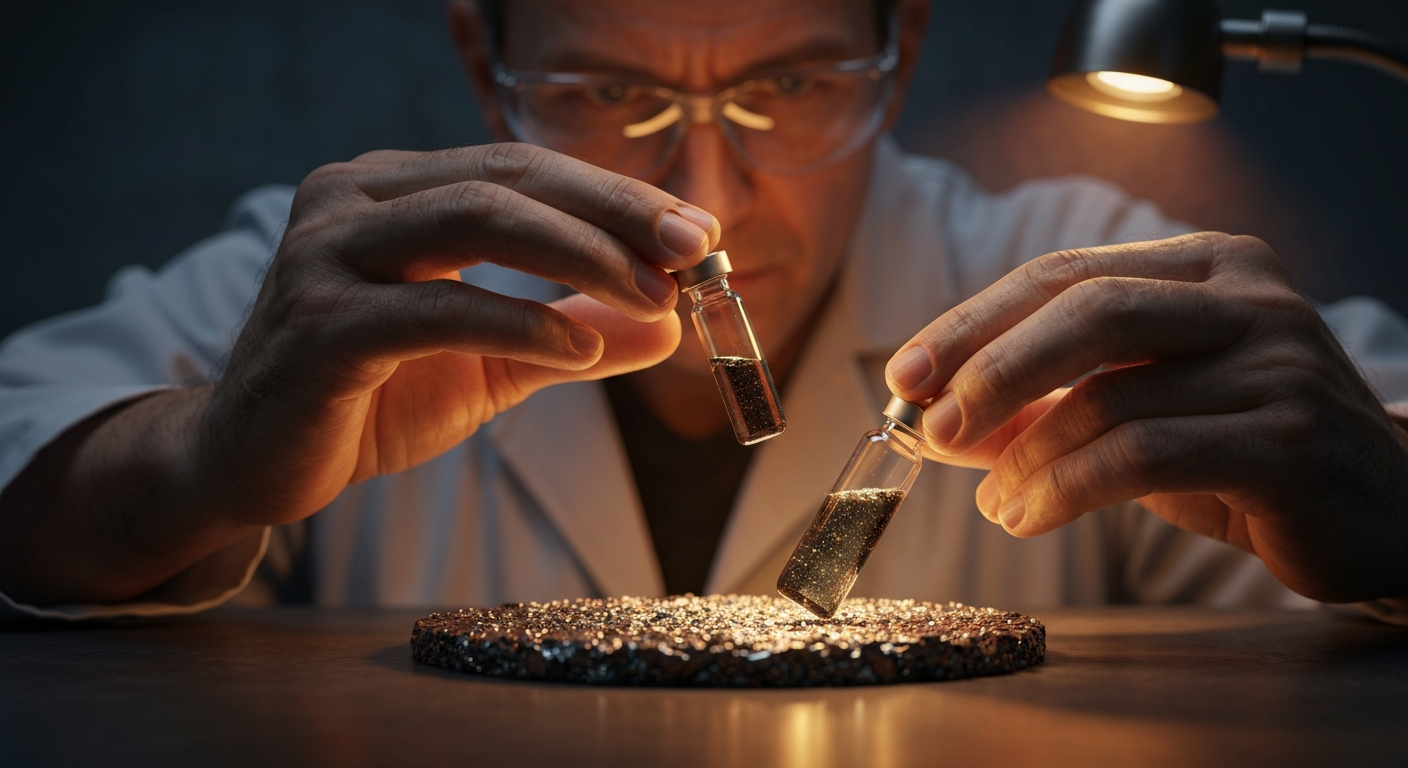
Image Alt Text: HERO: Cinematic hyperrealistic art: A lone scientist stands in a dimly lit laboratory, holding a small, crystalline sample that glows faintly with an inner light. Warm Rembrandt-style amber key light from one side dramatically highlights their focused face and hands, casting deep atmospheric shadows across the scientific instruments in the background. Volumetric haze fills the air, adding depth to the scene.
So, how does it work? Think of heat as tiny, invisible messengers, called phonons, constantly vibrating and bumping into each other to carry energy through a material, much like a crowd of people passing a message along. In most materials, these messengers zip through quickly, efficiently transferring heat. But in this newly identified crystal, CsTlI₄ (that’s Cesium Thallium Iodide), it’s like those messengers suddenly hit a chaotic, spongy obstacle course.
The crystal has a "hierarchical bonding framework," meaning its internal structure isn't uniformly rigid. Instead, it’s built with some bonds that are strong and others that are surprisingly weak and wobbly, almost like a building with some solid walls and some made of jello. This unusual setup makes it incredibly difficult for heat's messengers to find a clear path. Instead, they get scattered, their vibrations dampen, and they lose their energy almost instantly.
What makes this truly incredible is that it's the crystalline equivalent of a sponge designed to absorb sound, but for heat. Most really good insulators, like the fluffy fiberglass in your attic, work by trapping air. This crystal, however, does it intrinsically, at the atomic level, making it potentially far more efficient and durable. It holds the current record for the lowest intrinsic thermal conductivity at room temperature, clocking in at an ultralow 0.14 W m⁻¹ K⁻¹. That's better than many materials currently used in advanced insulation and thermoelectric devices.
Unlocking the Secrets of Super-Insulation
The key to this super-insulation lies in understanding its atomic "architecture." The CsTlI₄ crystal features a strange mix of atoms. You have cesium and iodine atoms forming robust connections, while thallium and iodine atoms interact in a weaker, almost "antibonding" way. This creates a highly unusual lattice, a bit like a dance floor where some dancers are tightly linked, and others are just loosely swaying. This vibrational mismatch and the soft lattice structure mean that the heat-carrying vibrations struggle to propagate effectively.
Instead of a smooth wave, the heat's journey through this material is a stop-and-start, inefficient scramble. This significantly reduces what scientists call "phonon group velocities"—essentially how fast those heat messengers can travel—and enhances "phonon scattering," meaning the messengers bounce around chaotically rather than moving in a straight line. It's like trying to run through a thick, muddy field versus a clear track; the mud slows you down immensely.
Image Alt Text: SECTION1: Intimate cinematic close-up: A gloved hand delicately places a tiny, shimmering crystal into a specialized analytical device on a workbench. The crystal catches a dramatic single warm light source from above, casting intricate shadows. The scientist's lab coat sleeve is visible in the background, out of focus, with a rich, shallow depth of field.
So, for the skeptics, what would they need to see? The primary hurdles for any new material are scalability and cost. Can we make enough of this stuff cheaply? Can it be integrated into existing manufacturing processes? The research itself outlines a powerful machine learning approach, almost like a super-smart recipe generator, which dramatically speeds up finding such materials. This data-driven strategy could identify other similar crystals quickly.
What Else Changes When Your Home Becomes a Thermal Fortress?
If this crystal, or materials like it, become widely available, the second-order effects would be enormous. Imagine homes that require significantly less energy for heating and cooling. This directly translates to lower utility bills for you and a dramatic reduction in carbon emissions globally. Your home appliances might even run more efficiently if insulated better, extending their lifespan. We might see completely new designs for buildings, where structural elements also serve as their own super-insulation, making construction simpler and more sustainable. This same principle could also be used in tiny devices, improving everything from computer chips that run cooler and faster to more efficient thermoelectric generators that turn waste heat into electricity. (/article/finally-solar-cells-that-work-and-last)
Think about the implications for extreme environments, too. Spacecraft, for example, need incredible thermal regulation, and a material like this could be a game-changer. Even simple things, like travel mugs or picnic coolers, could achieve unheard-of insulation performance. This is why material scientists spend countless hours examining the hidden properties of the world around us—because a seemingly simple rock can hold secrets that could profoundly impact our daily lives and our planet's future. (/article/the-hidden-reason-your-clean-fuel-is-so-expensive)
Image Alt Text: SECTION2: Wide cinematic environment shot: A modern, minimalist home stands amidst a vast, snow-covered landscape under a dramatic, warm-hued golden-hour sky. Wisps of atmospheric haze cling to the distant mountains, emphasizing the home's striking contrast against the extreme weather, suggesting its superior insulation.
It's a testament to the quiet power of fundamental research. By understanding the intricate dance of atoms, we're not just finding new materials; we're unlocking entirely new possibilities for how we live, build, and interact with the world's energy. It truly makes you wonder what other humble substances are just waiting to reveal their extraordinary powers. (/article/salt-and-dirt-could-make-your-fuel)
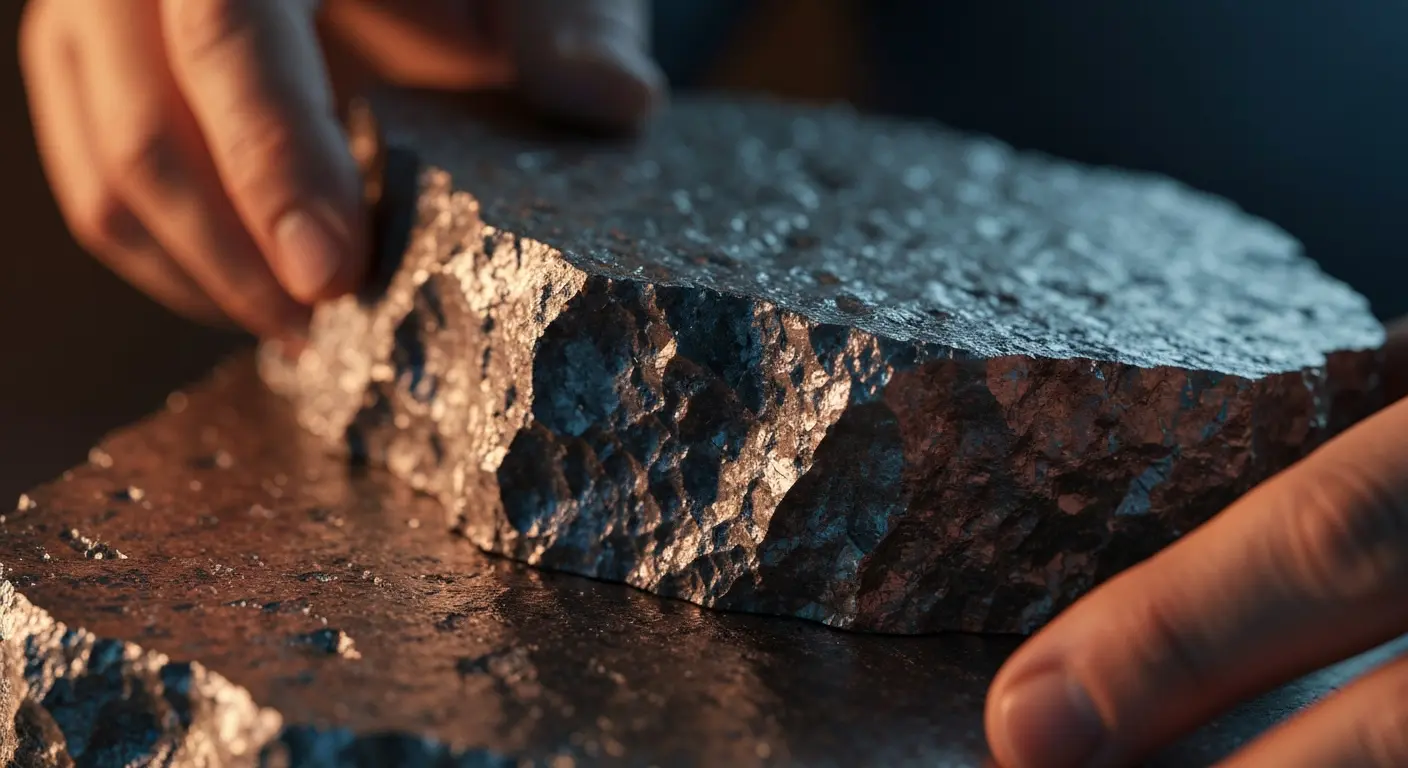
Image Alt Text: SECTION3: Moody atmospheric detail: A close-up shot of a rough, textured crystalline surface, perhaps a slab of the new insulating material, showing subtle facets and varying shades. Deep shadows play across its irregularities, while a warm, focused accent light from the side highlights its unique structure with a painterly quality.
Key Takeaways
- Scientists have identified CsTlI₄, a crystalline material with record-low intrinsic thermal conductivity, meaning it's incredibly good at blocking heat flow at an atomic level.
- This material's unique "hierarchical bonding framework" disrupts heat-carrying vibrations (phonons), making it challenging for heat to pass through.
- The discovery, accelerated by machine learning, could lead to far more energy-efficient homes, devices, and even specialized applications like spacecraft insulation within the next 10-15 years.
Frequently Asked Questions
What is a thermal insulator? A thermal insulator is a material designed to resist the flow of heat. It slows down the transfer of thermal energy from warmer areas to colder ones, keeping things hot or cold for longer.
How does CsTlI₄ insulate heat so well? CsTlI₄ has a unique atomic structure with both strong and weak chemical bonds, creating a "soft lattice." This chaotic structure scatters heat-carrying vibrations (phonons), preventing them from moving efficiently through the material.
Why is finding new thermal insulators important? Better thermal insulators can drastically reduce energy consumption for heating and cooling homes and buildings, leading to lower utility bills and reduced carbon emissions. They also improve efficiency in electronics and other technologies.
Editorial note: The scientific findings presented in this article are sourced exclusively from published research papers, peer-reviewed studies, certified inventions, and registered patent filings. Images generated by AI.
Stay ahead of the curve
The science that shapes tomorrow — in your inbox every week
The scientific findings presented in our articles are sourced from published research papers, peer-reviewed studies, certified inventions, and registered patent filings. Subscribe for focused weekly coverage, hands-on explainers, and practical insights that help you stay curious — no jargon, no noise.
By subscribing, you agree to receive newsletter and marketing emails, and accept our Terms of Use and Privacy Policy. You can unsubscribe anytime.
Bio-inspired Materials, Biomimetics & Green Material Design
Biomimetics journalist exploring the remarkable materials scientists are designing by studying — and copying — the natural world.
View full profile →