The Metal That Quietly Protects Your Body
Imagine a material that can change its mind, becoming soft or hard exactly when needed. This isn't science fiction; it's a new design approach using smart metals that could soon protect you in surprising ways.

Have you ever worn a sports brace that felt just a little too stiff, or perhaps wished a medical splint could somehow adapt as your injury healed? We live in a world where things are largely designed to be one way: either firm and supportive, or flexible and yielding. But what if a material could be both, intelligently changing its nature on demand?
This limitation means many products, from the mundane to the critical, are a compromise. You get a rigid cast for a broken arm, but it can’t soften for comfort as swelling goes down, nor can it stiffen further if you accidentally bump it. This fixed design approach has dominated how we interact with the physical world for centuries, leaving us stuck with static solutions for dynamic problems.
A team of researchers, however, is proposing a truly novel way to overcome this. They've outlined a design method they call "Stiffness-Switching," which finally taps into the hidden talents of special metals. This approach defines a universal way for certain materials to shift between being flexible like a rubber band and rigid like a steel bar, offering a range of capabilities that were once purely theoretical.
Stiffness That Changes Its Mind
At the heart of this idea are what scientists call shape memory alloys (SMAs), materials that have a surprising ability to remember a shape and return to it. Think of it like a very special spring: you can bend it out of shape, but apply a bit of heat or stress, and it springs back to its original form. What's even more fascinating is their ability to exist in two different internal arrangements, or "phases," that dramatically alter their physical properties.
These phases are like two different moods for the metal. In one mood, called the martensitic state, the metal is soft and flexible, almost like a piece of putty. You can easily stretch it or squish it. But then, with a trigger like a slight change in temperature, it snaps into its austenitic state, becoming rigid and strong, much like a piece of hardened steel.
The truly powerful idea behind "Stiffness-Switching" isn't just that these metals can do this, but that we can now design devices around this reversible change. It's like having a LEGO brick that can turn from jelly to a hard block and back again, allowing for products that actively respond to your needs. This isn't just an incremental improvement; it's a complete rethink of how we use these clever materials.
Beyond Just Bendy: The Real Power
You might already be familiar with shape memory alloys without even realizing it. They're often used in medical devices like vascular stents, tiny mesh tubes inserted into blood vessels to keep them open. These stents can be squished small for insertion, then expand inside the body to do their job. However, a surprising fact is that most current uses of these alloys only leverage one aspect of their unique properties, often a one-time change, not the ability to repeatedly switch between soft and stiff.
The "Stiffness-Switching" paradigm unlocks a universal design toolkit based on this reversible magic. Imagine materials that offer constant pressure, like a hug that never gets too tight or too loose. Or devices that can absorb impact energy in stages, gently cushioning a small bump but stiffening instantly for a serious blow. It's about giving products the intelligence to adapt their physical properties in real time, for everything from medical care to daily conveniences.
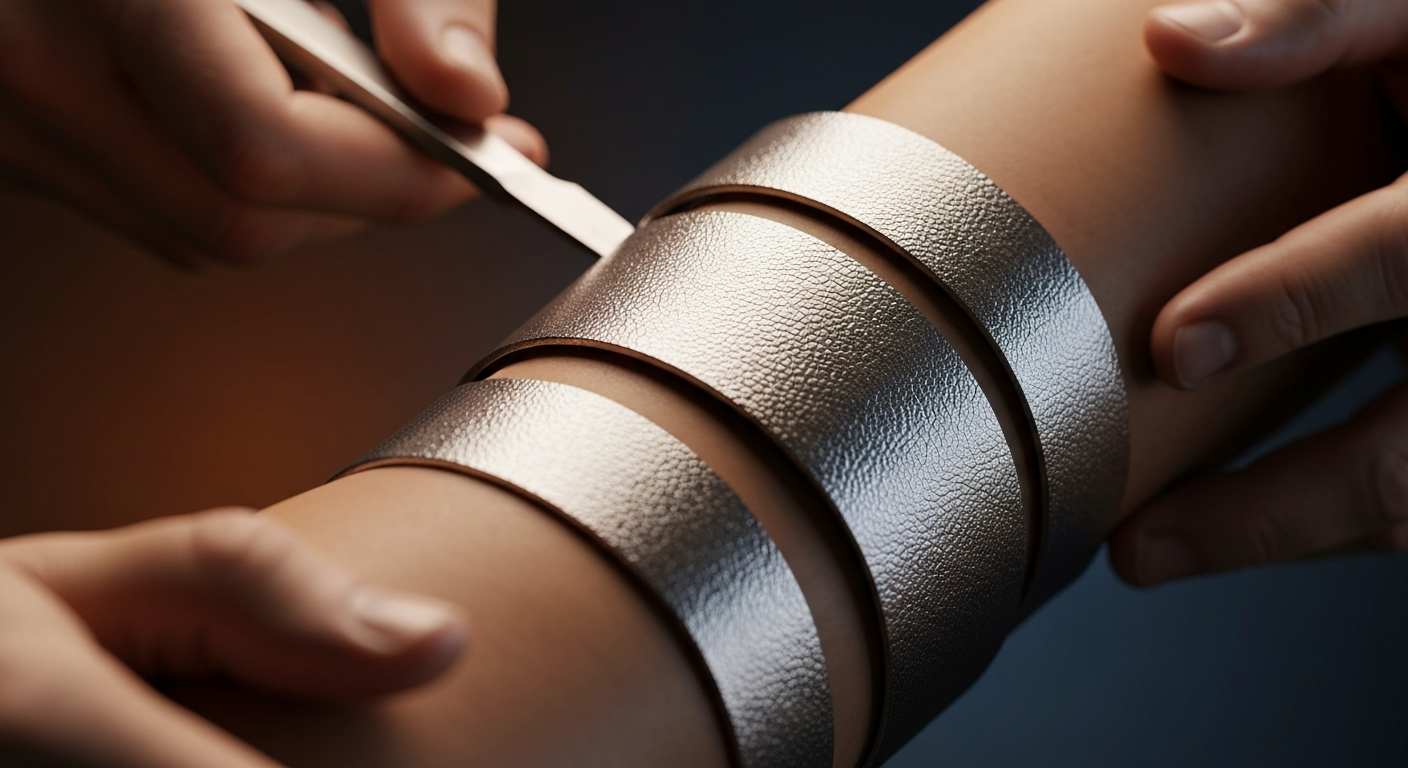
This framework moves beyond simply using a material's existing properties. It defines a systematic way to design with the transition itself as the core function, leading to four powerful capabilities: adaptive constant-force fitting, dynamic impact energy absorption, multi-stage programmable force control, and adaptive support inside the body. For example, a doctor could adjust the rigidity of an external splint without removing it, providing tailored support as an injury heals. This kind of flexibility can dramatically improve patient comfort and recovery. (/article/a-sugar-gel-that-rewires-your-cells-to-heal) offers another glimpse into adaptive medical solutions.
From Snoring to Stronger Bones
So, where might you see this "Stiffness-Switching" in your everyday life? One fascinating application is in passive self-adaptive anti-snoring devices. Imagine a small, comfortable device that automatically adjusts its rigidity inside your airway, gently holding it open just enough to prevent snoring, but flexing as you move or swallow. It’s far more comfortable and effective than rigid alternatives.
Another practical use could be in impact protection. Think about a container designed to protect fragile items. With stiffness-switching, the container could remain flexible for minor bumps, but instantly harden its structure if it senses a sudden, strong impact, absorbing the force much more effectively. This could guard everything from delicate electronics to precious cargo during shipping.
In the medical field, this could be a real game-changer. Beyond adaptive splints, consider specialized interfaces for quick-release medical fixations or even internal devices that provide adaptive support for organs. The material could be soft during insertion and removal, then stiffen to provide precise, secure support within the body. (/article/your-bodys-glue-may-finally-stop-cancer) explores another way materials are being reimagined for internal body applications.
The Future: Adaptive Devices for Your Life
While the core principles of "Stiffness-Switching" are exciting, it’s important to remember this is still a foundational paradigm. We’re likely 5-10 years away from seeing these kinds of truly adaptive devices widely available in everyday products. Researchers are still refining the precise triggers and responses, as well as the manufacturing processes needed to bring these intricate designs to scale.
The potential, however, is immense. Think about aerospace applications, where structures could lighten for fuel efficiency, then stiffen instantly to withstand extreme forces during reentry. Or robotics, where a robot's grip could adjust its force precisely, from cradling a delicate egg to lifting a heavy tool. The elegance lies in using a material's inherent "mind-changing" ability to make our world more responsive and resilient.
Ultimately, this isn’t just about making stronger materials; it’s about making smarter ones. Ones that understand context, that can adapt to changing situations, and that offer a more intuitive, safer, and ultimately more human experience. Your next device might not just do its job; it might anticipate your needs.
Key Takeaways
- A new "Stiffness-Switching" design approach allows materials to reversibly change from flexible to rigid, adapting to dynamic situations.
- This paradigm, based on shape memory alloys, unlocks capabilities like adaptive force control and dynamic impact absorption for various applications.
- Future adaptive devices could range from smart medical splints and anti-snoring aids to next-generation protective packaging, improving safety and comfort.
Frequently Asked Questions
What are Shape Memory Alloys (SMAs)? SMAs are metals that can be deformed but return to their original shape when heated. They also possess two distinct internal structures, allowing them to switch between flexible and rigid states based on triggers.
How does "Stiffness-Switching" work? It's a design approach that uses a material's ability to reversibly change between a flexible "martensitic" state and a rigid "austenitic" state, creating devices that adapt their firmness on demand.
What are some practical uses of this technology? Potential applications include adaptive anti-snoring devices, multi-level impact protection for fragile goods, and smart medical splints that adjust their rigidity as an injury heals.
When can I expect to see these products? While the concept is powerful, widespread consumer products using this advanced "Stiffness-Switching" are likely 5-10 years away, as manufacturing and refinement continue.
Editorial note: The scientific findings presented in this article are sourced exclusively from published research papers, peer-reviewed studies, certified inventions, and registered patent filings. Images generated by AI.
Stay ahead of the curve
The science that shapes tomorrow — in your inbox every week
The scientific findings presented in our articles are sourced from published research papers, peer-reviewed studies, certified inventions, and registered patent filings. Subscribe for focused weekly coverage, hands-on explainers, and practical insights that help you stay curious — no jargon, no noise.
By subscribing, you agree to receive newsletter and marketing emails, and accept our Terms of Use and Privacy Policy. You can unsubscribe anytime.
Nanomaterials, Thin Films & Semiconductor Innovation
Nanomaterials researcher turned science journalist, covering the science happening at scales too small to see but too important to ignore.
View full profile →