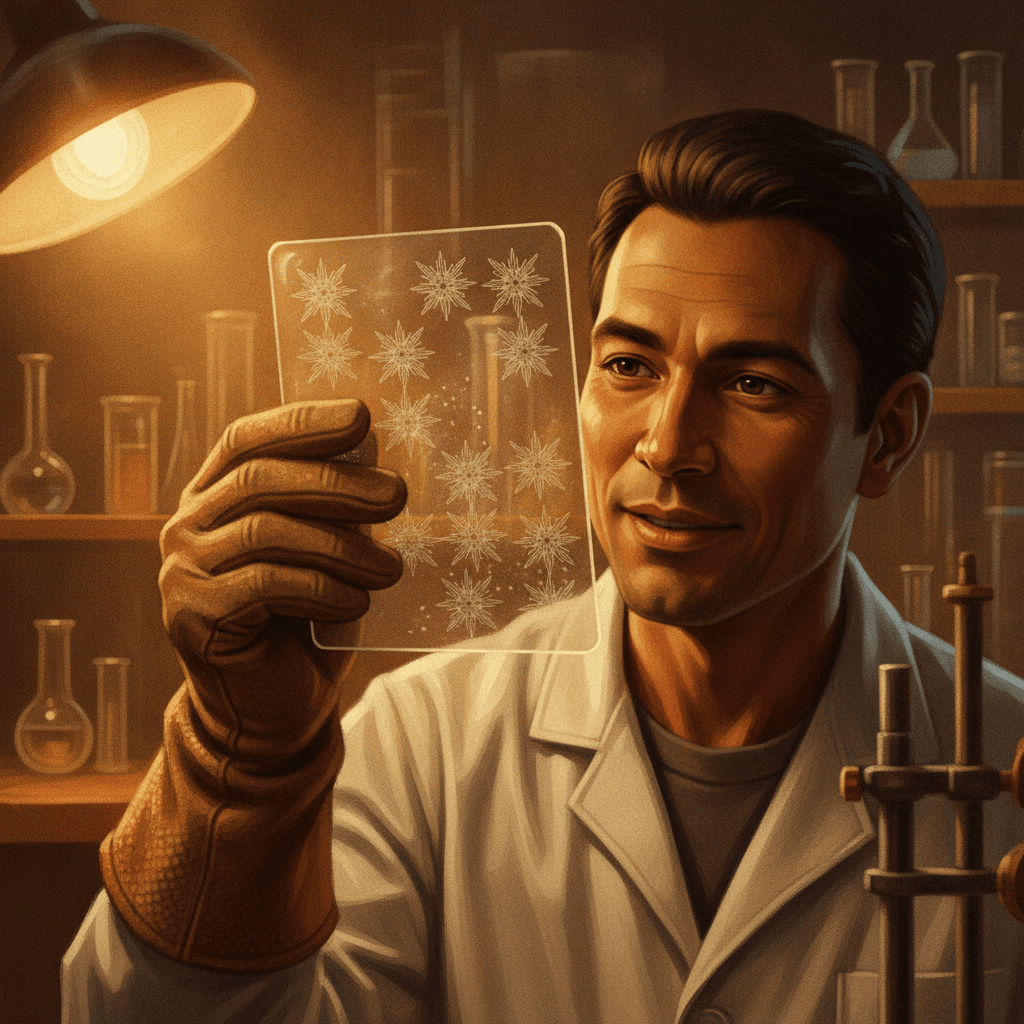
A Flash of Light May Erase Your Sickness
Imagine healing your body with light instead of harsh treatments. Scientists are getting closer to using targeted light to switch off sickness inside your cells.

Imagine a future where a flash of light, not a cocktail of harsh chemicals, could be the answer to turning off disease within your own body. It sounds like science fiction, something from a futuristic movie, but this isn't just a distant dream anymore. Researchers are now actively designing ways to use light as a precision tool, literally flipping switches inside your cells to fight illnesses, and the progress is closer than you might think.
Currently, facing serious health challenges like recurrent sickness often means enduring treatments that damage healthy tissue alongside the bad. This is a major hurdle in medicine, leaving many people to battle severe side effects. But what if you could target only the problem cells, leaving everything else untouched?
Your Body's Hidden Light Switches
The secret lies in a fascinating field called optogenetics, a method where scientists use light to control the activity of individual cells, much like using a tiny remote control. Think of your cells as having countless tiny light switches, normally off, but capable of being turned on or off with a specific beam. This allows for incredibly precise adjustments.
Scientists introduce special light-sensitive molecules into the sick cells, which then act like tiny antennas. When a specific wavelength of light hits these antennas, it triggers a desired action, perhaps activating your body's natural defenses to fight back or even prompting a cell to self-destruct if it's causing harm. This level of control is truly astounding, offering a new path for healing.

Guiding Light Deep Inside You
One of the biggest hurdles has been getting that activating light deep enough into your body to reach hidden problems. Light usually struggles to penetrate thick tissues, like trying to shine a flashlight through a wall. But here's where materials science is making incredible strides: scientists are developing ingenious biomaterials – essentially tiny, sophisticated delivery systems – that act like microscopic tunnels or light guides.
These biomaterials can encapsulate the light-sensitive components and deliver them directly to target cells. They can even incorporate materials that generate light inside your body, overcoming external penetration issues altogether, much like having a tiny, self-powered glow stick right where you need it. This means future therapies could reach deep-seated issues without invasive procedures. For instance, tiny, implantable devices made from these materials could shine light precisely where it’s needed, offering a truly targeted solution that could make your next treatment work so much better. [/article/why-your-next-shot-could-work-so-much-better]
Training Your Body to Heal Itself
This isn't just about destroying bad cells; it's about intelligent control. Preclinical studies are showing how this light-based approach can be used to regulate genes, which are like the instruction manuals for your cells. If a cell has a faulty instruction leading to sickness, light could potentially rewrite that instruction or even turn off the problematic process.
Even more remarkably, researchers are exploring its use in immunotherapy, where your body's own immune system is trained to find and eliminate threats. Optogenetics allows scientists to precisely activate immune cells in a localized area, turning them into highly effective, targeted defenders against specific problems. It's like giving your body's natural army a highly accurate GPS system.
The Journey from Lab to Life
While the science is immensely promising, this technology is still largely in preclinical stages, meaning it’s being tested in labs and animal models. Overcoming challenges like ensuring the safety of these light-sensitive components and optimizing their efficiency within complex biological systems requires dedicated effort from teams of molecular engineers and materials scientists. They’re working to refine how these tiny light switches behave in a living system.
If all goes well and these critical hurdles are cleared, we might see the first targeted light therapies enter limited human trials within the next decade. Widespread availability, where this could be a standard treatment option for many, is likely 10 to 15 years away. It's a complex journey, but the potential rewards are immense for future health.
A Quieter, Kinder Path to Wellness
Imagine a time when the fight against sickness is less about enduring harsh, whole-body treatments and more about precise, localized interventions. This quiet revolution in healing aims to offer therapies with far fewer side effects, preserving your quality of life while effectively tackling disease. It’s about leveraging the power of light to unlock your body's inherent ability to heal itself, giving you a gentler, more controlled path to wellness. The idea that a simple flash of light could one day erase your sickness isn't just hopeful — it’s becoming a tangible future, closer every single day.
One day, we might use light to restore the healthy function of your cells, preventing the breakdown that happens as your cells fall apart as you age. [/article/your-cells-fall-apart-as-you-age] This ability to delicately tweak cellular behavior could reshape how we think about treatment. The promise of light to target specific issues, leaving healthy tissue untouched, could ultimately change how we approach illnesses, offering a future where healing is much more kind and precise.
Key Takeaways
- Optogenetics uses light to precisely control individual cells, offering a path for highly targeted therapies that avoid widespread damage to healthy tissue.
- New biomaterials are solving key challenges by delivering light-sensitive components and even generating light deep within the body.
- While still in preclinical stages, this technology promises a future of more precise, gentler treatments for various illnesses, potentially revolutionizing how we heal.
Frequently Asked Questions
What is optogenetics? Optogenetics is a scientific technique that uses light to control the activity of individual cells in living tissue. Scientists introduce light-sensitive molecules into cells, which then respond by activating or deactivating specific functions when illuminated.
How does light help fight sickness? Light can be used to precisely target and activate specific cellular processes within diseased cells. This might involve prompting them to self-destruct, boosting the body's immune response, or even correcting faulty genetic instructions, all with minimal impact on healthy surrounding tissues.
When might this treatment be available? This light-based therapy is currently in advanced preclinical development. Initial human trials could begin within the next decade, with widespread clinical availability likely 10 to 15 years in the future, pending continued research and regulatory approvals.
Editorial note: The scientific findings presented in this article are sourced exclusively from published research papers, peer-reviewed studies, certified inventions, and registered patent filings. Images generated by AI.
Stay ahead of the curve
The science that shapes tomorrow — in your inbox every week
The scientific findings presented in our articles are sourced from published research papers, peer-reviewed studies, certified inventions, and registered patent filings. Subscribe for focused weekly coverage, hands-on explainers, and practical insights that help you stay curious — no jargon, no noise.
By subscribing, you agree to receive newsletter and marketing emails, and accept our Terms of Use and Privacy Policy. You can unsubscribe anytime.
Advanced Polymers, Smart Materials & Structural Innovation
Materials scientist and journalist covering the new generation of substances reshaping construction, manufacturing, and everyday objects.
View full profile →