Your Farm Can Quietly Grow Its Own Power
Imagine a world where the very air around us becomes a clean fuel source, powering everything from farms to factories. This isn't a distant dream; scientists are using smart tech to make it real, offering a powerful way to make crucial fertilizers without fossil fuels.
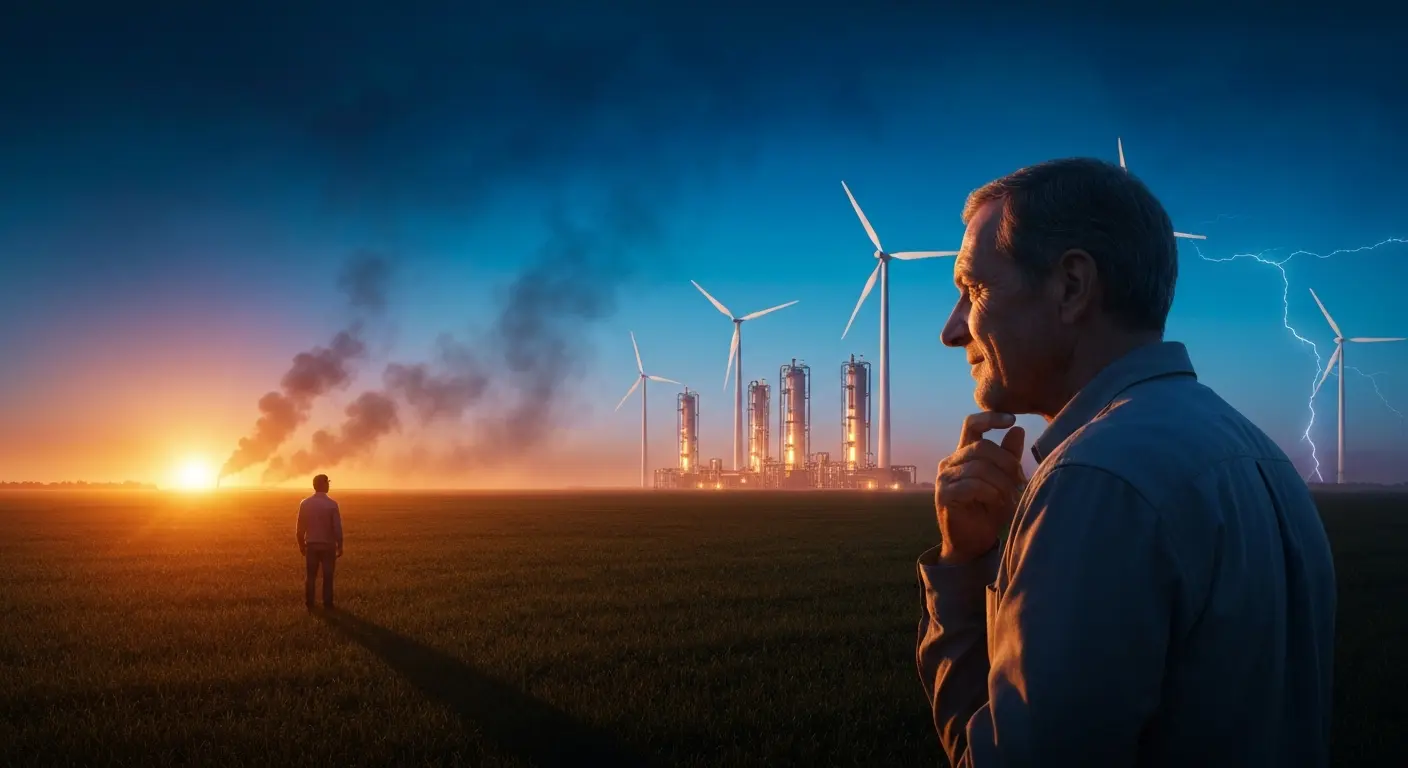
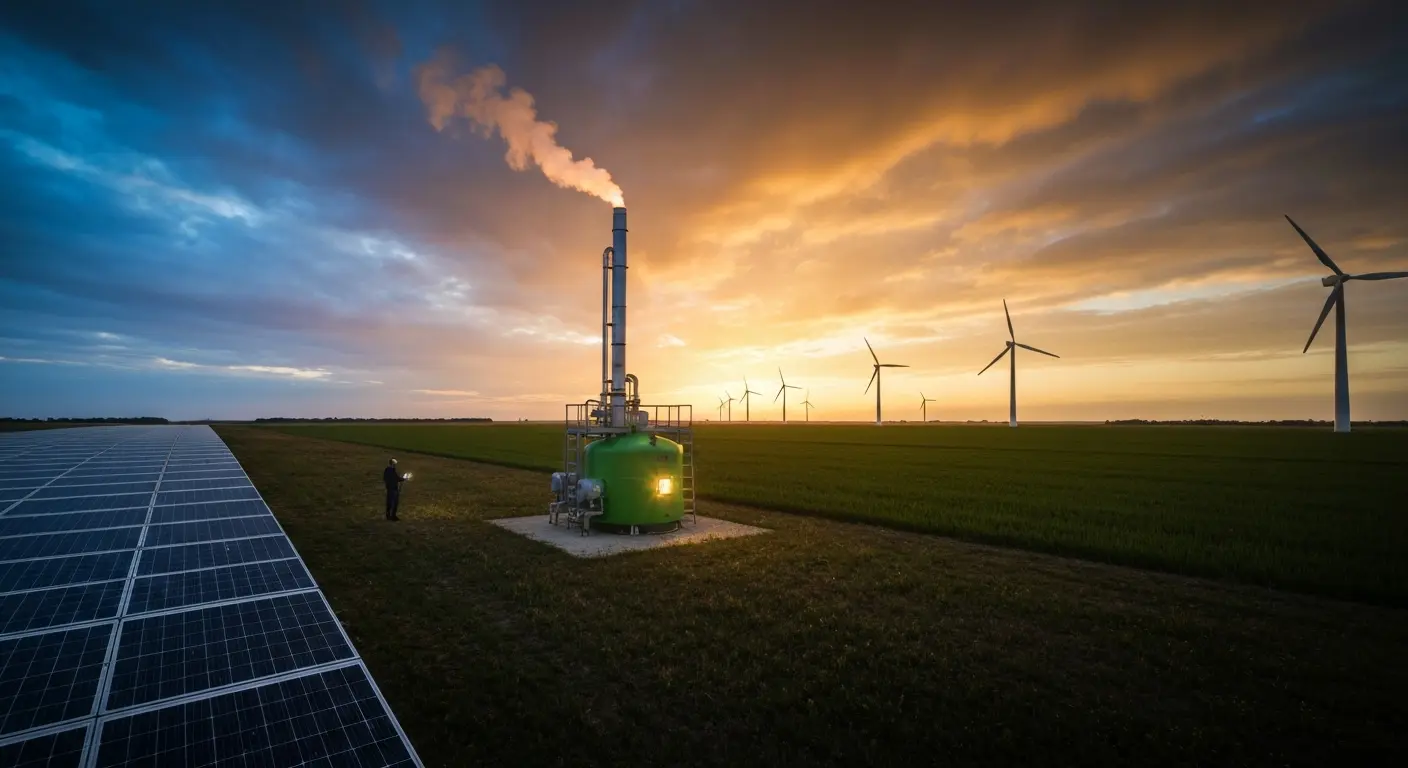
What if your local farm could produce its own clean fertilizer, powered only by sunlight and wind, without ever touching fossil fuels? Imagine a future where the air we breathe becomes a direct source for vital chemicals, all happening silently and sustainably. This isn't just an eco-fantasy; it's a future that advanced computing is helping engineers design right now.
This isn't sci-fi. Real, peer-reviewed evidence from institutions like the National Institute of Advanced Industrial Science and Technology (AIST) in Japan shows us the path. Their research, published in Europe PMC, details how machine learning is optimizing "green ammonia" production under limited power supplies. Ammonia, a compound of nitrogen and hydrogen, is absolutely crucial for modern agriculture, as it’s the main ingredient in most fertilizers that help your food grow.
Traditionally, making ammonia is a dirty business, consuming vast amounts of natural gas and emitting significant carbon dioxide. The conventional way requires extremely high temperatures and pressures, like forcing two very shy magnets together with immense effort. "Green ammonia" skips this by using renewable electricity to split water into hydrogen and extract nitrogen from the air, then combining them without fossil fuels. This new method essentially powers the ammonia-making process with sunshine and wind.
Here’s how the magic happens: instead of engineers guessing the best settings for the machinery, researchers are using something called Bayesian optimization. Think of it like a smart chef trying to perfect a new recipe. Instead of blindly trying every single ingredient combination, the chef (the algorithm) learns from each attempt, intelligently choosing the next ingredient adjustments that are most likely to lead to the perfect dish. It's a method for finding the best recipe for green ammonia production using minimal energy.
This smart approach allows researchers to rapidly sift through countless possibilities for designing a green ammonia plant. Normally, finding the optimal setup—balancing things like temperature, pressure, and catalyst types—would require an almost endless number of virtual experiments, like trying on every single pair of shoes in a giant department store. With Bayesian optimization, they can zero in on the best design much faster, cutting down the "shopping" time dramatically. It means they can maximize the output of green ammonia even when the power supply (like from a solar farm) might fluctuate, like a smart thermostat learning your home's heating patterns.
The Japanese team, including scientists like Dr. Hiroki Takekawa and Dr. Hiroshi Kageyama, successfully designed a process that produced more green ammonia at under 10 megawatts (the power equivalent to roughly 2,000 average homes) than any previously reported method. This is a big deal because it means you can set up smaller, localized green ammonia plants powered by local renewables, rather than needing huge, centralized, fossil-fuel-dependent factories. It’s a bit like replacing giant, smoky power plants with small, efficient solar panels on individual rooftops .
One surprising fact? The world uses more nitrogen fertilizer, largely made from ammonia, than any other agricultural chemical—about 180 million tons a year. Making just half of that "green" would be a colossal step towards decarbonizing agriculture and stabilizing food supplies. Imagine farmers making their own fertilizer on-site, directly from the air and water, with their own renewable energy.
What does this mean for the future? If green ammonia becomes widespread, it could fundamentally change not just agriculture but also global energy grids. Ammonia is also an excellent hydrogen carrier, meaning it can store and transport clean energy much more easily and safely than pure hydrogen. So, those solar farms in sunny deserts could produce ammonia, ship it across oceans, and then that ammonia could be converted back to hydrogen to power homes and vehicles in distant cities. It's like turning sunshine into a liquid battery that you can easily move around the world.
Of course, scaling this up faces hurdles. The cost of renewable electricity needs to keep coming down, and the efficiency of the conversion process still has room to improve. It's not something you'll see on every farm next year, but the foundational science is strong, pointing to a realistic timeline of perhaps 10-15 years for widespread adoption.
Think about the secondary effects: less reliance on volatile fossil fuel markets, cleaner air, and more resilient food systems. Farmers could gain unprecedented independence from global supply chains and price fluctuations. This quiet revolution, driven by smart algorithms, has the potential to reshape how we feed ourselves and power our world, turning something as common as air into a source of clean energy and vital nutrients. It’s a powerful reminder that sometimes, the biggest solutions are hidden in plain sight, just waiting for a clever mind to unlock them.
Key Takeaways
- Machine learning can optimize green ammonia production, making it more efficient even with limited renewable power.
- Green ammonia significantly reduces carbon emissions from fertilizer production, crucial for sustainable agriculture.
- Beyond fertilizer, green ammonia can serve as a clean, transportable fuel for global energy needs.
Frequently Asked Questions
What is green ammonia? Green ammonia is ammonia produced using hydrogen from water electrolysis, powered by renewable electricity like solar or wind, instead of hydrogen derived from fossil fuels. It's a clean alternative for fertilizer and energy storage.
How does machine learning help make green ammonia? Machine learning, specifically Bayesian optimization, intelligently selects the best operating conditions and design variables for green ammonia plants. This drastically reduces the number of simulations needed to find the most efficient production process.
Why is green ammonia important for the future? Green ammonia is crucial for decarbonizing agriculture by providing sustainable fertilizer. It also acts as an excellent clean energy carrier, allowing renewable energy generated in one location to be easily stored and transported globally.
Editorial note: The scientific findings presented in this article are sourced exclusively from published research papers, peer-reviewed studies, certified inventions, and registered patent filings. Images generated by AI.
Stay ahead of the curve
The science that shapes tomorrow — in your inbox every week
The scientific findings presented in our articles are sourced from published research papers, peer-reviewed studies, certified inventions, and registered patent filings. Subscribe for focused weekly coverage, hands-on explainers, and practical insights that help you stay curious — no jargon, no noise.
By subscribing, you agree to receive newsletter and marketing emails, and accept our Terms of Use and Privacy Policy. You can unsubscribe anytime.
Energy Access, Microgrids & Clean Power for the Developing World
Energy access journalist focused on the innovations that can bring clean power to the two billion people the mainstream transition risks leaving behind.
View full profile →