Your Dentist's Computer Sees Things You Miss
Imagine your dental X-ray being analyzed by an extra "eye" that never gets tired. This surprising new AI can spot subtle dental issues with near-human accuracy, offering you more precise and proactive oral care.
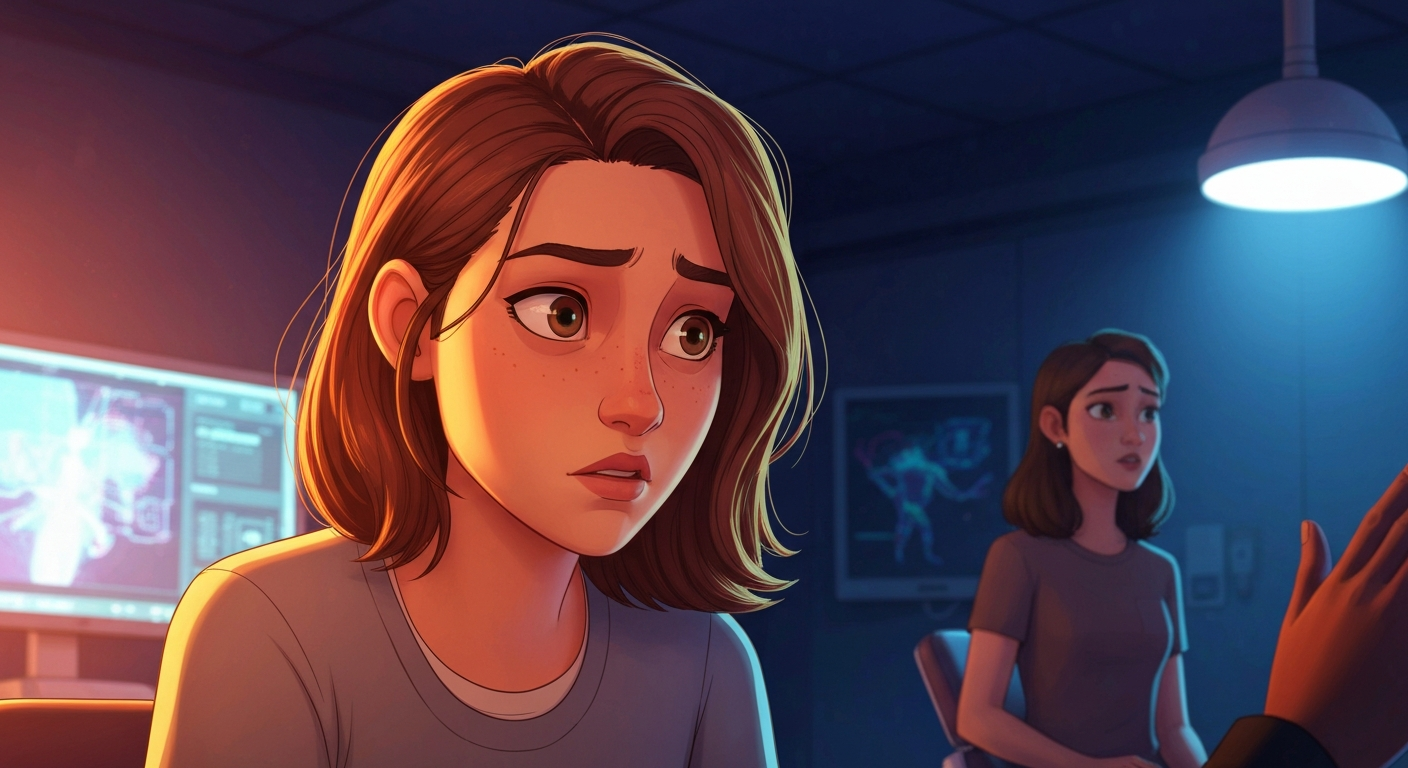
Imagine settling back in that intimidating dental chair. The bright light is in your eyes, and a cold plastic sensor presses against your gums as the technician steps away to hit the X-ray button. You hear the faint beep, and in a moment, an image of your jaw appears on a screen – a shadowy landscape of bone and teeth, looking like a confusing alien world. What exactly is your dentist seeing in that grayscale puzzle, and could something important be hiding in plain sight?
Even with years of intense training, spotting tiny cracks, early signs of decay, or subtle bone loss in these intricate images is incredibly tough. It's like trying to find a specific grain of sand on a vast beach, especially when issues are just beginning to form. Human eyes can get tired, and different experts might interpret the same image slightly differently, which is just a natural part of being human. This means sometimes, important clues about your health might be missed, potentially leading to bigger problems down the road.
But what if you had a tireless, hyper-focused observer always ready to help your dentist? Scientists are now teaching computers, specifically a type of artificial intelligence called a large language model (LLM), to do exactly that. Think of an LLM like an incredibly dedicated student who has studied millions of dental X-rays, memorizing every possible variation of healthy tissue and every tiny sign of trouble.
Your Dentist's New Assistant Sees Deeper Than Ever
These AI models don't just "look" at an image; they process it almost like a detective sifting through countless case files. They compare what they see in your X-ray to everything they've ever learned, spotting patterns and anomalies that might be too subtle for the human eye to consistently catch. This isn't about the computer replacing your dentist, but rather giving them a powerful second opinion, like having a super-smart assistant who never gets distracted.
Recent research published in Europe PMC highlighted how effective this digital helper can be. Scientists compared these AI systems—including well-known models like ChatGPT, Grok, and a specialized AI named MANUS—to board-certified oral and maxillofacial radiologists. They fed 120 anonymized dental images, a mix of panoramic X-rays (OPGs), small periapical images, and even detailed CT scans, to both the human experts and the AI. The results were truly eye-opening.
In their first pass, MANUS and ChatGPT achieved an impressive 92.5% accuracy in identifying dental issues, successfully detecting problems on 111 out of 120 images. Grok followed closely, with 88.3% accuracy. When given a second look, the AI's performance actually climbed higher: MANUS hit 95.0% accuracy and ChatGPT reached 93.3%.

Why a Consistent Computer Eye Matters for Your Health
To put that in perspective, the expert human radiologists achieved 96.7% accuracy. This means these AI models, in some cases, were performing almost identically to highly trained human specialists. ChatGPT also showed incredible consistency, or reproducibility, meaning it gave the same correct answer almost every time it saw the same type of image, like a perfectly reliable diagnostic mirror. This level of reliability helps reduce the natural variations that can occur between different human interpretations.
This consistent accuracy from AI is a big deal for you because it means less chance of a missed diagnosis. Imagine a tiny cavity just forming, or a subtle bone cyst starting to develop under your gum. An AI, trained on vast datasets, is less likely to overlook these early warning signs than a busy human dentist might be on a demanding day. Catching issues early can mean the difference between a simple filling and a complex root canal, or even preventing more serious conditions from taking hold. Detecting subtle changes early, before they become serious problems requiring complex interventions, can mean the difference between a simple fix and a major health battle, much like how new insights into your body's 'glue' may finally stop cancer.
This isn't just about spotting obvious problems; it's about seeing the unseen that could become a future problem. The AI acts as a digital safety net, constantly vigilant. This means fewer return visits for issues that have worsened, and more proactive care tailored specifically to your oral health needs. Perhaps the most surprising fact here is that one of these AIs, MANUS, actually outperformed ChatGPT and Grok in overall accuracy in the study. What's even more fascinating is that this wasn't just about general AI. It was about specific training. The more an AI sees, the better it gets, like a student studying diligently for an exam, soaking up every possible detail.
How This Technology Actually Works for Your Dentist
So, how do these complex AIs learn to "see" things? It’s not magic, but rather immense data processing. When you provide an AI with thousands upon thousands of dental X-rays, each meticulously labeled by human experts with diagnoses like "cavity here," "bone loss there," or "no issues," the AI begins to find statistical patterns. It learns to associate certain visual textures, densities, and shapes with specific conditions. This process is called machine learning, where the computer builds an internal model of what disease looks like versus health, much like how a chef learns to recognize the perfect doneness of a steak through repeated experience.
These models, known as large language models (LLMs), might sound like they only deal with text, but many are now "multimodal." This means they can understand and process different types of information at once, including images, video, and text. So, an AI like ChatGPT or Grok doesn't just read words; it can "look" at your X-ray, understand the visual information, and then even generate text describing its findings, helping your dentist quickly grasp the potential issues. And as we're learning more about how everything in your body connects, like your gut has a hidden power switch affecting your whole system, oral health is no exception. This interconnectedness makes accurate diagnostics even more crucial.
What This Means for Your Next Dental Visit
While this research shows incredible promise, you won't walk into your dentist's office tomorrow and find an AI exclusively calling the shots. These systems are still in their research phases and require further validation in real-world clinical settings. Think of them as co-pilots, not solo pilots. Your dentist will remain the captain, using their experience and judgment, but with an AI constantly monitoring the instruments and providing vital input.
It will likely take another five to ten years before such advanced AI diagnostic tools become a standard part of your dental check-up. This timeline allows for rigorous testing, regulatory approvals, and seamless integration into existing dental software. The goal is to make your dental care more precise, efficient, and ultimately, safer. It’s about leveraging technology to augment human expertise, ensuring that nothing goes unnoticed, and that you receive the earliest possible care for any developing issues.
So the next time you're sitting in that chair, staring at your X-ray, know that a silent, digital assistant might soon be working tirelessly behind the scenes. It's an extra layer of protection, quietly helping your dentist spot those hidden details, providing you with better insights into your oral health, and ultimately, giving you more reasons to smile confidently.
Key Takeaways
- Advanced AI models, including MANUS and ChatGPT, can identify dental issues from X-rays with diagnostic accuracy nearly matching human experts.
- These AI tools offer high consistency and reproducibility in their analyses, which helps reduce the chance of missed diagnoses due to human variability.
- While still in development, AI is expected to become a standard adjunct in dental care within 5-10 years, making oral health diagnostics more precise and proactive.
Frequently Asked Questions
What is multimodal AI in dentistry? It's an artificial intelligence system that can analyze different types of data, like dental X-ray images and text, to help dentists identify and diagnose oral health issues more accurately.
How accurate are AI models compared to human dentists? Studies show AI models like MANUS achieved 95.0% accuracy, very close to expert radiologists at 96.7%. ChatGPT also performed strongly at 93.3% accuracy, demonstrating comparable diagnostic capability.
Will AI replace my dentist for X-ray interpretation? No, AI is intended as a supporting tool. It will assist dentists by offering a consistent second opinion and highlighting subtle issues, augmenting human expertise rather than replacing it.
Editorial note: The scientific findings presented in this article are sourced exclusively from published research papers, peer-reviewed studies, certified inventions, and registered patent filings. Images generated by AI.
Stay ahead of the curve
The science that shapes tomorrow — in your inbox every week
The scientific findings presented in our articles are sourced from published research papers, peer-reviewed studies, certified inventions, and registered patent filings. Subscribe for focused weekly coverage, hands-on explainers, and practical insights that help you stay curious — no jargon, no noise.
By subscribing, you agree to receive newsletter and marketing emails, and accept our Terms of Use and Privacy Policy. You can unsubscribe anytime.
AI Ethics, Algorithmic Bias & Responsible Computing
Technology ethicist and journalist covering the human consequences of the decisions embedded in algorithms and AI systems.
View full profile →