Your Bus Will Quietly Power Itself in Winter
Imagine your electric bus stranded by cold weather. New findings reveal how smart software can prevent these costly failures. Discover how cities are using physics and AI to keep electric fleets running smoothly, even in the harshest winters.
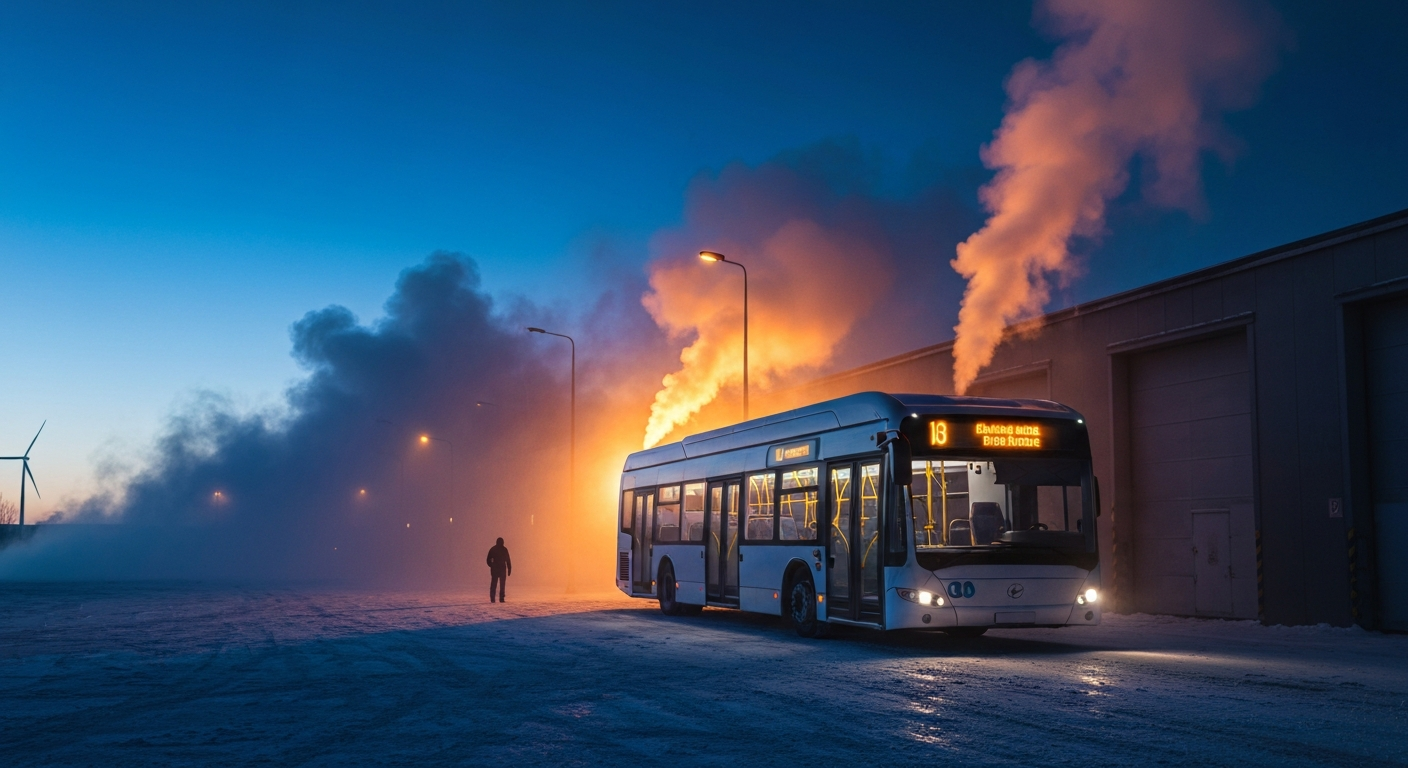
Have you ever shivered on a bus, wondering why it's taking so long, especially on a brutally cold day? For electric buses, those chilly temperatures aren't just uncomfortable; they’re a silent enemy, quietly draining batteries far faster than usual. It’s a problem many cities face as they switch to greener electric fleets, only to discover their eco-friendly transport grinds to a halt when the mercury drops.
This isn’t just about making you wait; it’s a massive logistical headache for transit agencies. They plan bus routes down to the minute, with specific times for charging during layovers. But winter messes up this careful timetable, like a hidden hand stealing power. What happens is that the need to heat the cabin—keeping passengers and the driver warm—eats up so much energy that the bus battery can't fully recharge during its short breaks, leading to a domino effect of delayed and undercharged buses.
The solution isn't just bigger batteries or more chargers; it’s smarter planning. Scientists have developed a clever framework called WeatherRobustBus, which acts like a crystal ball for electric bus performance in cold weather. It takes real hourly weather data and feeds it into actual transit schedules, then predicts exactly how much energy a bus will need and whether it can make its next trip without running out of juice.
Think of it like a meticulous pit crew chief for every bus. This system combines an understanding of physics—how batteries work and how much energy is needed to heat a space—with a touch of machine learning, which is like teaching a computer to recognize patterns from lots of data. It’s able to predict battery drain with impressive accuracy, even when temperatures plunge below freezing, where simpler predictive models often fail badly. Researchers at institutions like the University of Toronto have been refining this for real-world scenarios.
One surprising fact: the simple act of heating the bus cabin can actually consume more energy than driving the bus itself in very cold conditions. This hidden drain is the root cause of many winter failures. The WeatherRobustBus framework validated its cabin heating predictions against an independent simulation, achieving an impressively low all-year error of 0.213 kilowatt-hours (kWh) RMSE over 8760 hours of data, confirming its reliability even in extreme cold below -12°C.
So, how does it actually prevent cold-weather breakdowns? The system identifies when a bus block (a set of assigned trips for one vehicle) is likely to fail. Then, it suggests "robust policies" to keep things on track. These aren’t complex, expensive upgrades. Instead, they involve simple, practical steps.
Here's how these policies can work:
- Opportunity charging: This means charging the bus more frequently, even for short bursts, during its scheduled layovers or at the end of a line. It’s like topping off your phone battery whenever you see an outlet, instead of waiting for it to be almost dead.
- Fuel-fired cabin heating bridge: For the very coldest days, instead of relying solely on the battery for heat, a small, efficient fuel-powered heater can temporarily take over the heating load. This saves precious battery power for driving.
- Modest buffering: Giving a bus a tiny bit more battery charge than strictly necessary before it starts a difficult cold-weather route, like an extra cushion.
By combining these strategies, the researchers showed a dramatic reduction in failure probability. For instance, across eight cold-wave days, the mean failure probability dropped from 75.9% to just 11.2%. The most impactful lever was opportunity charging, showing just how much small, frequent charges can extend a bus’s cold-weather range. This approach is providing a clear pathway from raw weather data to smart decisions for electric bus fleets.
This isn't just an abstract academic exercise. Projects like this are already being used or piloted in cities like Toronto. What this means for you, the passenger, is a more reliable ride, fewer delays, and knowing that your city's electric buses are genuinely ready for winter, quietly keeping you warm and on schedule. This kind of predictive technology helps ensure that our cleaner transportation future isn't just a fair-weather friend but a year-round reality. (/article/your-remote-village-can-quietly-power-itself) could benefit from similar energy management insights, too.
In the future, expect this kind of physics-anchored machine learning to extend beyond buses, optimizing everything from electric delivery vans to even personal electric vehicles. (/article/your-phone-battery-will-finally-last-longer) because similar predictive models could one day inform how you charge and use your devices for maximum efficiency in different conditions. This kind of invisible optimization is quietly shaping our future with greater reliability.

Key Takeaways
- Cold weather dramatically increases energy drain in electric buses due to cabin heating, often causing service failures.
- A new physics-anchored machine learning system accurately predicts bus battery performance in extreme cold, unlike simpler models.
- Simple operational adjustments like frequent small charges ("opportunity charging") can significantly reduce winter bus failures.
Frequently Asked Questions
What causes electric buses to fail in cold weather? Cold weather significantly increases the energy needed for cabin heating, which drains batteries faster than they can recharge during short layovers. This imbalance can lead to buses starting routes undercharged, causing delays and service disruptions.
How does WeatherRobustBus predict bus failures? WeatherRobustBus combines physics-based models of battery drain and cabin heating with machine learning, using real hourly weather data and transit schedules. It calculates the energy needs for each bus block, predicting potential failures with high accuracy.
What solutions does the system propose to prevent failures? It suggests strategies like increasing "opportunity charging" during layovers, using supplementary fuel-fired heaters for cabin warmth on extremely cold days, and adding a small "buffer" of extra battery charge before challenging routes.
When will this technology be widespread? Similar systems are already being piloted in major cities. You can expect more widespread implementation and refinement over the next 5-10 years as transit agencies continue electrifying their fleets and seek robust winter solutions.
Editorial note: The scientific findings presented in this article are sourced exclusively from published research papers, peer-reviewed studies, certified inventions, and registered patent filings. Images generated by AI.
Stay ahead of the curve
The science that shapes tomorrow — in your inbox every week
The scientific findings presented in our articles are sourced from published research papers, peer-reviewed studies, certified inventions, and registered patent filings. Subscribe for focused weekly coverage, hands-on explainers, and practical insights that help you stay curious — no jargon, no noise.
By subscribing, you agree to receive newsletter and marketing emails, and accept our Terms of Use and Privacy Policy. You can unsubscribe anytime.
Energy Access, Microgrids & Clean Power for the Developing World
Energy access journalist focused on the innovations that can bring clean power to the two billion people the mainstream transition risks leaving behind.
View full profile →