Your Body Could Soon Grow Its Own Medicine
Imagine a tiny, wearable device that precisely delivers medicine right when you need it, adapting to your body's subtle shifts. This technology could soon redefine how millions manage chronic conditions, offering new freedom and control.
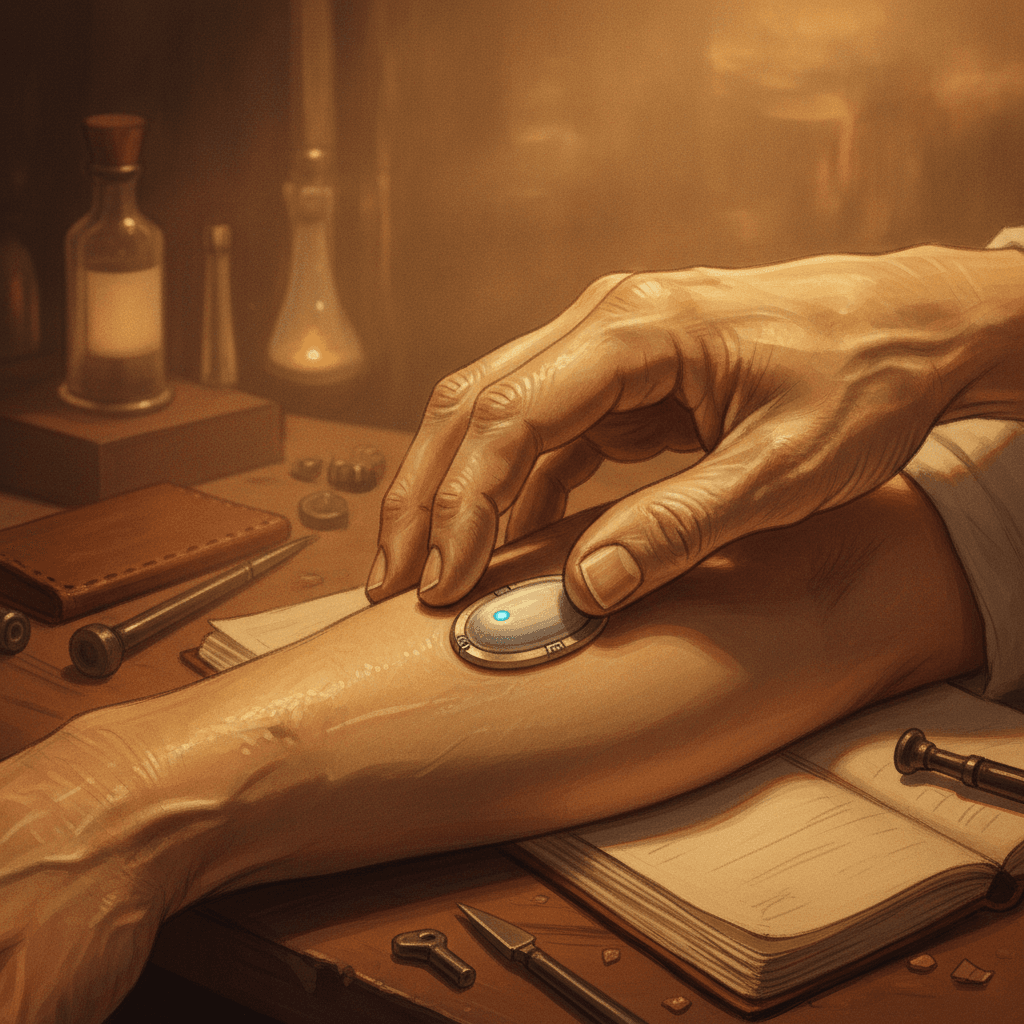
Managing a long-term condition often feels like a constant battle, doesn't it? You're always checking levels, remembering doses, and dealing with bulky equipment. But what if a tiny device, no bigger than a patch, could live on your skin, sensing your body's needs and delivering medicine exactly when it's required, all on its own?
This isn't science fiction anymore. Researchers have developed a wearable system that acts like a miniaturized artificial pancreas, effectively taking over some of your body’s vital jobs. It’s designed to continuously monitor your glucose, which is your body's sugar level, and then release tiny, precise amounts of insulin, the hormone that helps your body use sugar for energy. Think of it like a smart, tiny chef constantly tasting a dish and adding just the right amount of seasoning to keep it perfect.
How Tiny Needles Sense Your Body's Needs
The real cleverness here lies in how this device works. It combines two main parts: a sensor that checks your glucose and a pump that delivers the insulin. The sensor uses a microneedle array, which is like a tiny patch covered in microscopic needles, so small you barely feel them. These needles aren't there to inject anything, but rather to gently collect a little bit of fluid from just under your skin, called interstitial fluid, which reflects your blood sugar levels.
Inside these tiny needles is a special gel that glows differently depending on how much glucose is present. A small, built-in color sensor reads this glow, giving the system a real-time update on your body's sugar situation. This allows for continuous monitoring, rather than just snapshot readings.

A Micro-Pump That Measures Perfectly
Once the system knows your glucose level, the magic moves to the insulin delivery. Instead of a bulky motor pushing liquid, this device uses an "electrochemical micropump." This sounds complex, but imagine a very tiny, controlled explosion of gas created by electricity, like a mini air compressor. This gas gently pushes a highly elastic membrane, which in turn squeezes out a precise droplet of insulin—as small as half a microliter (0.5 μL), which is less than a single grain of sand's worth of liquid. This method ensures super accurate dosing, avoiding the kind of big, imprecise pushes traditional pumps might make.
This new design gets rid of the need for large fluid reservoirs and mechanical parts, making the entire device significantly smaller and much more comfortable to wear. Dr. Zhen Gu, a key researcher from the University of California, Los Angeles, emphasized that this compact design is a major step toward practical, everyday use. In tests with type 1 diabetic mice, this smartphone-controlled system consistently kept their glucose levels stable, preventing sudden spikes after meals, often keeping fluctuations within a tight 25 mg/dL range.
What This Could Mean for Your Health
This technology isn't just about managing diabetes; it's about giving you more freedom and control over your life. If you have a condition requiring constant medication, like diabetes, imagine not having to manually check your blood sugar or inject insulin multiple times a day. This device could potentially free you from that burden. It’s a bit like having your farm will soon know what crops need automatically adjust its watering, but for your body.
A surprising fact: Type 1 diabetes rates have increased by 21% worldwide between 2000 and 2018, according to the International Diabetes Federation. This means more people could benefit from easier, more automatic management. While human trials are still needed and could take several years, if current progress continues, a version of this wearable system could be a reality within the next 5-10 years. This could radically simplify daily routines, allowing you to live a more unconstrained life, with your body quietly managing itself. It's like having a silent, personal health assistant, ensuring your body’s internal balance is always just right.
What Still Needs to Happen for Widespread Use
Even with impressive mouse model results, the path to widespread human use involves rigorous testing. Researchers need to prove the device's reliability and safety over long periods in humans, ensuring no adverse reactions and consistent performance. Scaling up manufacturing to produce these intricate devices affordably is another hurdle. But the promise of a life with less daily medical burden is a powerful motivator. This miniaturized system truly offers a vision for the future of personal health care, where managing chronic conditions becomes a seamless, almost invisible part of your life, much like how your body can fight cancer with sound is changing treatment paradigms.
Key Takeaways
- A new wearable device combines a glucose sensor and insulin pump to automatically manage blood sugar, offering a more convenient approach than current methods.
- It uses tiny microneedles to sense glucose under the skin and an electrochemical micro-pump for precise, tiny doses of insulin, making it compact and efficient.
- This technology could significantly improve the quality of life for people with chronic conditions, reducing the need for constant manual checks and injections within the next decade.
Frequently Asked Questions
What is a wearable insulin micropump? It's a small device worn on the skin that senses your body's sugar levels and precisely delivers tiny amounts of insulin automatically. It aims to make managing conditions like diabetes much easier.
How does it know when to deliver insulin? It uses a tiny sensor with microneedles that monitors your glucose levels in the fluid under your skin. When glucose changes, the sensor detects it, telling the pump to release insulin.
When might this be available to me? While initial mouse trials are very promising, human trials and regulatory approvals are still needed. If successful, you might see such devices in clinical use within the next 5 to 10 years.
Editorial note: The scientific findings presented in this article are sourced exclusively from published research papers, peer-reviewed studies, certified inventions, and registered patent filings. Images generated by AI.
Stay ahead of the curve
The science that shapes tomorrow — in your inbox every week
The scientific findings presented in our articles are sourced from published research papers, peer-reviewed studies, certified inventions, and registered patent filings. Subscribe for focused weekly coverage, hands-on explainers, and practical insights that help you stay curious — no jargon, no noise.
By subscribing, you agree to receive newsletter and marketing emails, and accept our Terms of Use and Privacy Policy. You can unsubscribe anytime.
Battery Materials, Energy Storage Chemistry & Electric Vehicle Technology
Battery materials journalist covering the chemistry behind the electric revolution — and why the next decade of progress depends on what's inside the cell, not outside it.
View full profile →