Why Your Next Shot Could Work So Much Better
Imagine a world where vaccines and gene therapies are incredibly precise, delivering exactly what your body needs. New research is making this future more real than you think, promising fewer side effects and stronger treatments.
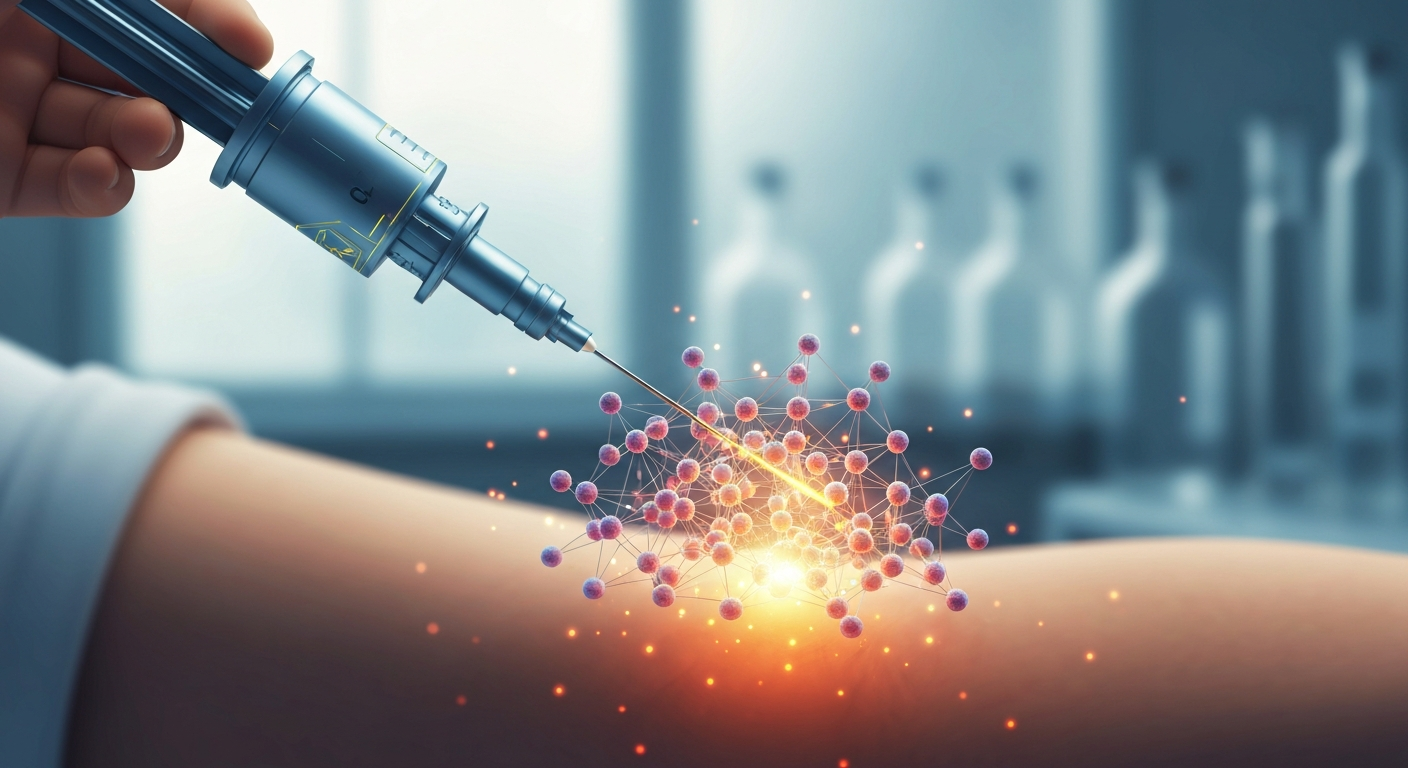
What if your next vaccine or life-saving genetic therapy was guaranteed to be perfect? Imagine a future where every single dose you receive is precisely calibrated, delivering the exact medicine your body needs, with no wasted ingredients or unpredictable results. This isn't just about feeling better; it's about making groundbreaking treatments, from cancer therapies to personalized medicines, vastly more effective and safer for everyone.
This isn't science fiction anymore. Researchers have taken crucial first steps towards making this a reality, addressing a subtle but significant challenge in how we deliver modern medicines. A recent thesis details a novel method for precisely counting mRNA molecules within their tiny delivery vehicles, called Lipid Nanoparticles (LNPs). This work is essential for optimizing the mRNA therapy products that helped us combat the SARS-CoV-2 pandemic and offer hope for genetic diseases, as highlighted in studies [1, 2].
Tiny Containers, Big Impact: How We’re Improving mRNA Delivery
Modern medicines like mRNA vaccines rely on incredibly tiny packages called Lipid Nanoparticles (LNPs). Think of these LNPs as microscopic delivery trucks, each designed to carry delicate mRNA molecules – which are like instruction manuals for your cells – directly to where they need to go. Your cells then read these instructions to produce specific proteins, whether it’s an immune-boosting protein for a vaccine or a missing protein to treat a genetic disorder.
The problem, until now, has been that scientists haven't had a perfect way to check what's inside each of these microscopic trucks. Current methods often take an average measurement across millions of LNPs, which is like trying to guess how many apples are in each truck by weighing the entire fleet. You might have some trucks completely empty, and others overloaded, without truly knowing the exact distribution, as noted by research [3, 4]. This imprecision can lead to unpredictable dosages and potentially less effective treatments.
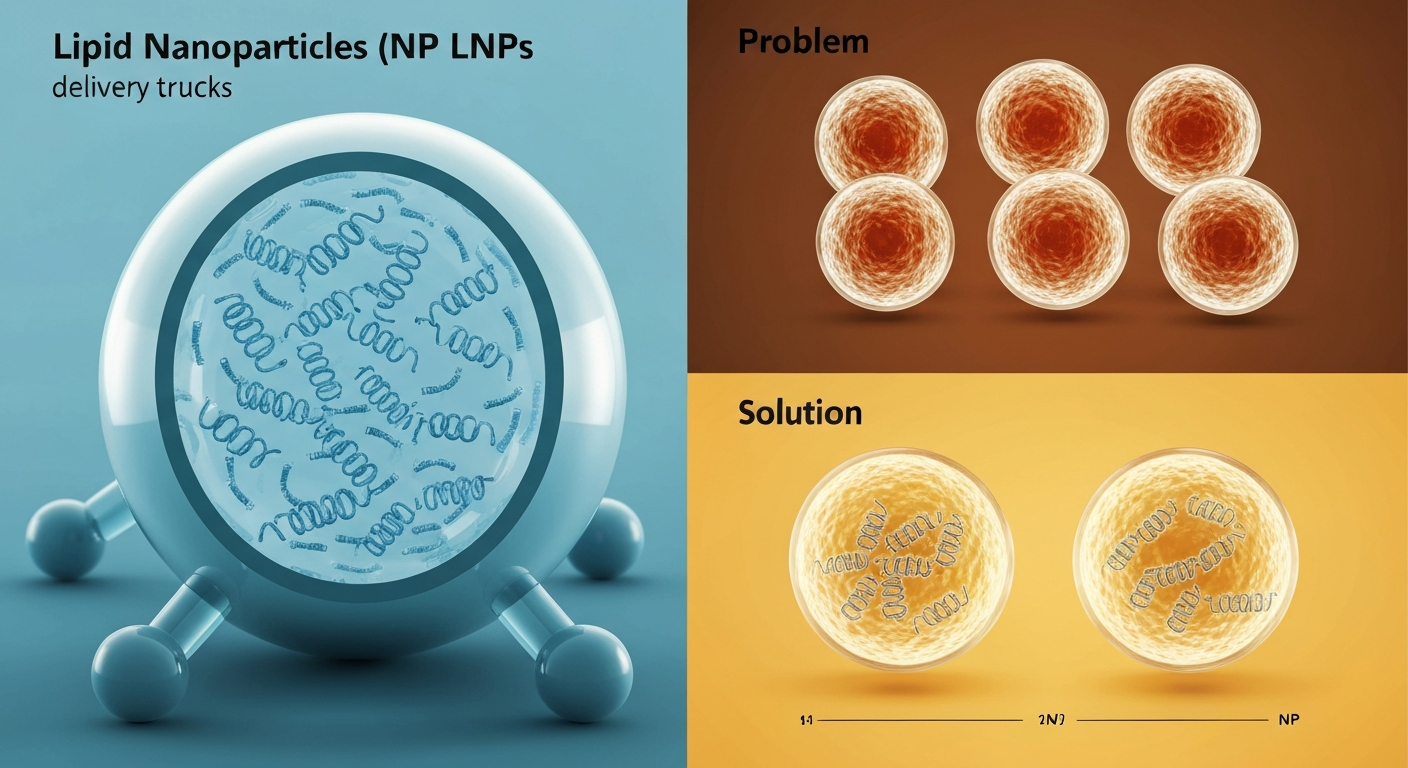
Peeking Inside the Delivery Trucks: A New Way to Count mRNA
This new method gives researchers a precise way to count the exact number of mRNA molecules inside individual Lipid Nanoparticles. Instead of guessing, we can now "see" into each tiny LNP. This is crucial because knowing the exact payload per LNP allows drug developers to fine-tune dosages, reduce waste, and ensure maximum efficacy for therapies.
The process involves a clever sequence of steps:
- Trapping the Delivery Trucks: First, the mRNA-LNPs are guided into tiny wells within a microfluidic flow cell. Imagine these as microscopic parking spots, holding individual delivery trucks in place.
- Isolating with Special Lenses: Researchers use a technique called ConvexLens Induced Confinement (CLiC) microscopy [5]. Think of CLiC like a super-powerful, specially shaped magnifying glass that can not only zoom in on individual trucks but also gently hold them steady and allow scientists to swap out liquids around them while they’re being watched.
- Opening the Containers: Once isolated, a lipid-like detergent called Triton X-100 is introduced. This acts like a tiny key, gently opening up the LNP trucks and releasing their mRNA cargo into the well.
- Making the Cargo Visible: Next, a special stain called Ribogreen is added. This stain attaches to the mRNA molecules, making them glow under fluorescent light. It’s like turning on tiny headlights for each instruction manual, so they become easy to spot.
- Counting Every Instruction: Finally, sophisticated particle-tracking algorithms are used to count each glowing mRNA molecule. This provides a single-particle resolution, telling us precisely how many instruction manuals were in each LNP.
In a representative sample, this method counted an average of 2.57 ± 0.9 mRNA molecules per LNP. This level of precision is a surprising fact many people don't realize we're only now achieving for these common medicines, and it opens up exciting possibilities for the future of medicine [4].
What Does This Mean For You? The Real-World Impact
Knowing the exact mRNA payload per LNP holds immense promise for your health. If we can control precisely how much mRNA is in each delivery vehicle, we can design therapies that are not only more potent but also safer. Imagine fewer side effects because you're not getting "empty" LNPs that do nothing, or "overloaded" ones that might trigger unintended immune responses.
This improvement in characterization is a vital step toward creating a new generation of highly optimized mRNA products. The current work is focused on establishing the method, meaning it will likely take five to ten years of further research, development, and regulatory approval before it directly impacts clinical treatments. However, the foundational evidence, like the reported 2.57 ± 0.9 mRNA/LNP count, is a solid starting point for future advancements.
Beyond Vaccines: A Future of Precision Medicine
This technology extends far beyond just vaccines. If we can perfectly tune mRNA delivery, it could revolutionize treatments for a host of conditions. Imagine gene therapies for cystic fibrosis or muscular dystrophy, where every cell receives the exact genetic instructions it needs. Picture personalized cancer treatments, where specific mRNA payloads direct your immune system to target only cancer cells, minimizing harm to healthy tissue.
The ability to reduce the proportion of empty LNPs in a dose is particularly important. Think of it like a pharmaceutical quality control system, ensuring that every "pill" (or LNP, in this case) contains the correct amount of active ingredient. This level of optimization could unlock the full potential of mRNA therapies, making them more predictable and effective across diverse applications . This isn't just about tweaking existing drugs; it's about building a foundation for entirely new kinds of treatments.
This kind of meticulous scientific work, often unseen by the public, is what genuinely moves the needle in medicine. It reminds us that even the smallest scientific discoveries can have the most profound effects, making the incredible possibilities of tomorrow’s treatments feel a little more tangible today.
Key Takeaways for Smarter Treatments
- Precision is Power: New methods allow counting individual mRNA molecules in delivery vehicles (Lipid Nanoparticles), moving beyond averaged measurements.
- Better Therapies: This precision means future mRNA vaccines and gene therapies could be more effective, deliver exact dosages, and have fewer side effects.
- Foundation for the Future: While not immediate, this research lays critical groundwork for optimizing a wide range of mRNA-based medicines, from vaccines to personalized cancer treatments.
Key Takeaways
- A new method can precisely count mRNA molecules in individual Lipid Nanoparticles (LNPs), moving beyond less accurate average measurements.
- This enhanced precision in mRNA delivery can lead to more effective vaccines and gene therapies with potentially fewer side effects.
- The research provides a crucial step towards optimizing a wide range of future mRNA-based medicines and accelerating advances in personalized treatments.
Frequently Asked Questions
What are Lipid Nanoparticles (LNPs)? LNPs are tiny fat bubbles that act as protective shields. They carry delicate mRNA molecules safely into your cells, much like a microscopic delivery vehicle.
Why is counting mRNA molecules important? Counting mRNA ensures each LNP delivers the correct dose. This precision can make vaccines and therapies more effective and reduce unintended side effects.
How does this new counting method work? It traps individual LNPs, opens them with a detergent, stains the mRNA to make it visible, and then counts them one by one using advanced microscopy.
When will this impact my medicine? This is foundational research. It will likely take 5-10 years of further development and testing before this method directly affects medicines you receive.
Editorial note: The scientific findings presented in this article are sourced exclusively from published research papers, peer-reviewed studies, certified inventions, and registered patent filings. Images generated by AI.
Stay ahead of the curve
The science that shapes tomorrow — in your inbox every week
The scientific findings presented in our articles are sourced from published research papers, peer-reviewed studies, certified inventions, and registered patent filings. Subscribe for focused weekly coverage, hands-on explainers, and practical insights that help you stay curious — no jargon, no noise.
By subscribing, you agree to receive newsletter and marketing emails, and accept our Terms of Use and Privacy Policy. You can unsubscribe anytime.
Longevity Science, Anti-Ageing Research & Regenerative Medicine
Longevity science journalist exploring the biology of ageing and the researchers racing to slow it down.
View full profile →