Medical Microbubbles: Tiny Bubbles Delivering Big Hope
Ever wonder why some medicines cause so many unwanted side effects? What if a clever trick could deliver drugs exactly where they're needed, using nothing but tiny, engineered bubbles?

Imagine swallowing a pill, enduring an injection, or receiving an infusion, knowing only a fraction of that medicine will do its intended job. Your body is an incredibly complex fortress, and getting drugs precisely where they need to go is a persistent challenge. It's like trying to water a single plant in a dense forest with a wide-spray hose; most of the water misses the mark.
This scattergun approach is why many powerful medications come with a laundry list of side effects. Medicines often travel throughout your entire system, affecting healthy cells alongside the sick ones. Think of common cancer treatments, for instance; they're effective against tumors but notoriously harsh on your whole body, causing widespread discomfort.
Why Your Body Makes Drug Delivery So Tricky
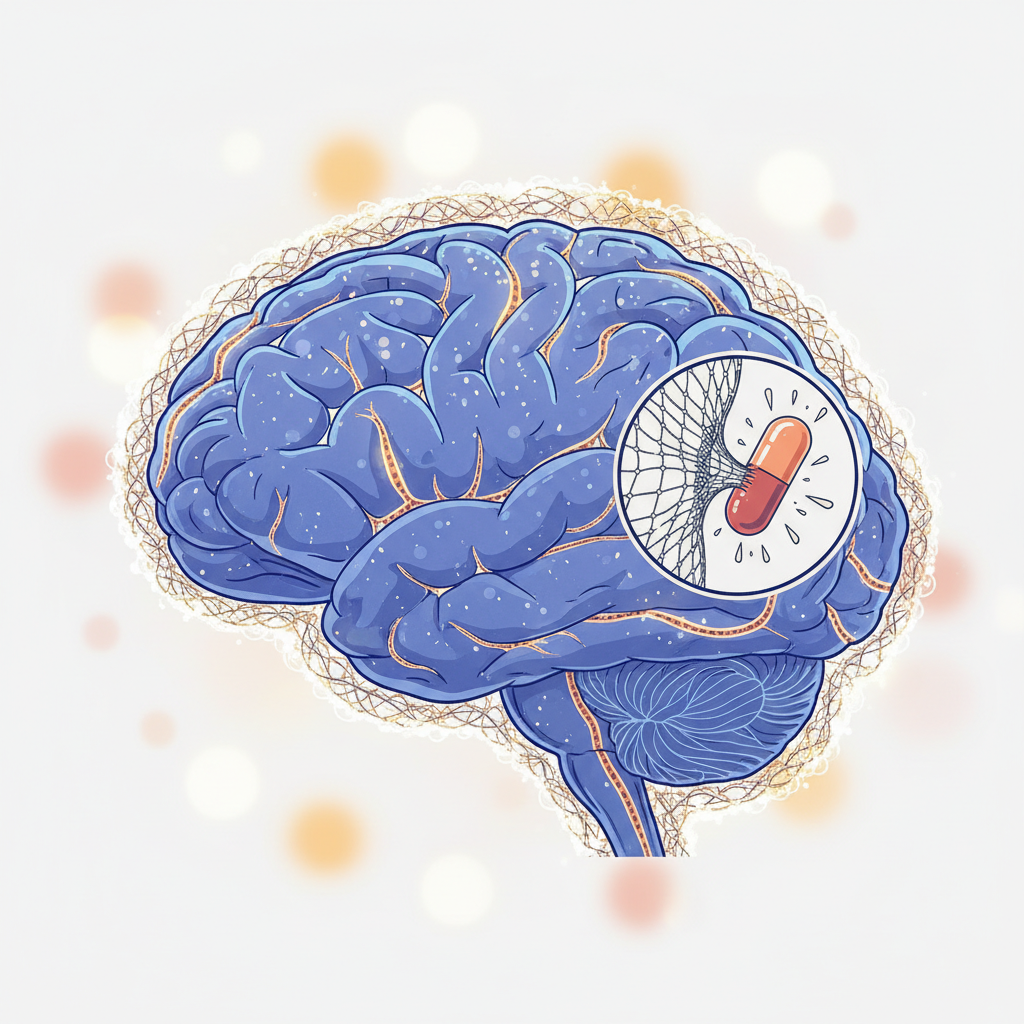
The challenge is multi-layered. First, your body has natural defenses. Some areas, like your brain, are shielded by formidable barriers designed to keep out invaders. The blood-brain barrier, for example, is a biological bouncer that prevents nearly 98% of potential drugs from reaching your brain cells. It’s essential for protection but a nightmare for treating neurological conditions like Alzheimer's or Parkinson's.
Existing solutions often involve very high doses to ensure some of the drug reaches the target, which inevitably increases those unwanted systemic side effects. Or, they require invasive procedures to bypass barriers. Researchers have spent decades trying to engineer smarter ways to deliver medicine, from microscopic capsules to chemically altered compounds. Many showed promise, but few truly achieved the precision medicine needs.
The Unlikely Solution: Microscopic Bubbles
Then, something unexpectedly simple began to take center stage: medical microbubbles. Yes, the same phenomenon you see in a fizzy drink, but engineered on a microscopic scale for a very different purpose. These aren't just decorative; they're becoming powerful allies in your body's fight against disease, offering a completely new way to deliver drugs.
So, what exactly are these medical microbubbles? Imagine a bubble in your soda, but hundreds of times smaller than a human hair—roughly the size of a red blood cell. Each is typically filled with a harmless gas, encased in a flexible, biocompatible shell made of lipids or proteins. They’re too small to see with the naked eye, but mighty in their potential.

How Tiny Bubbles Become Precision Delivery Vehicles
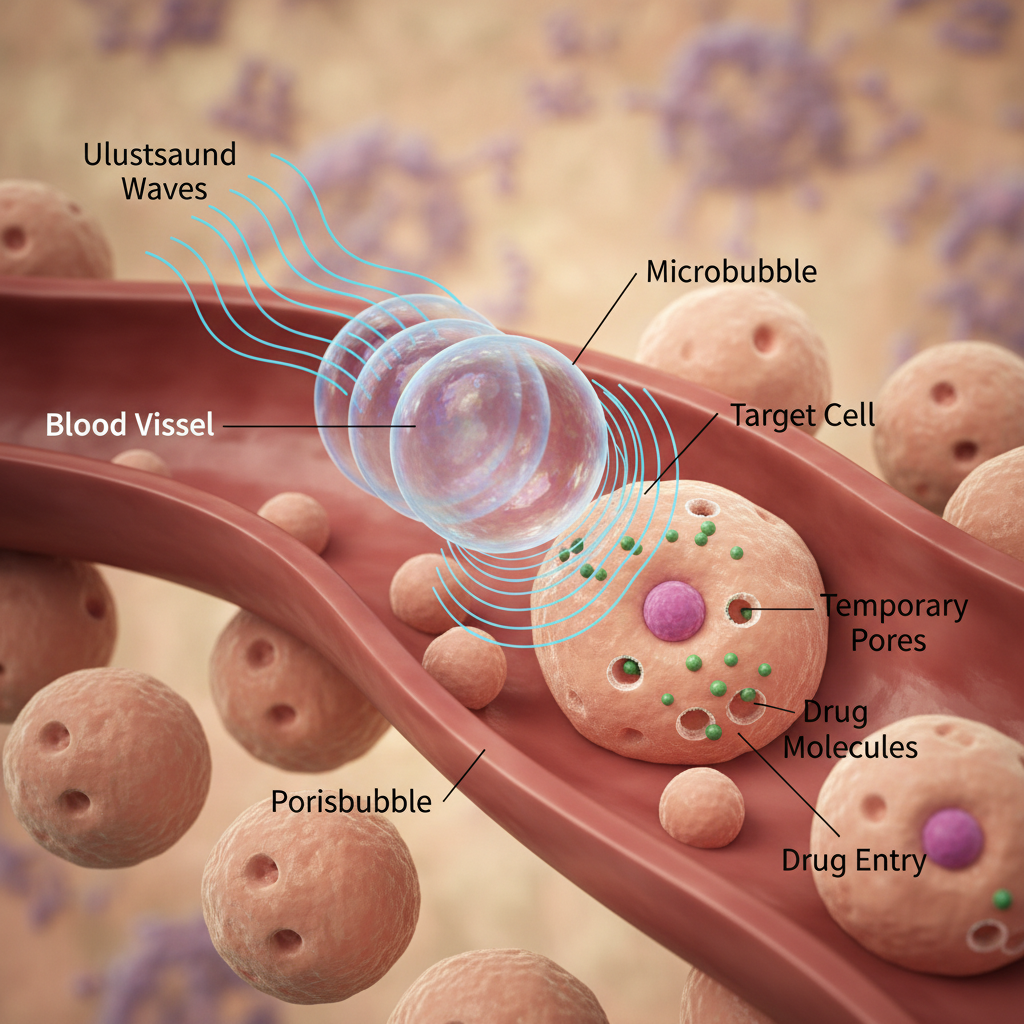
Here's the clever part: you inject these microbubbles into the bloodstream, where they circulate harmlessly, much like tiny, inert passengers. Then, doctors apply a focused ultrasound beam to the exact area needing treatment – say, a tumor, an inflamed joint, or a specific region of the brain. The ultrasound waves cause these microbubbles to gently expand and contract, like miniature balloons inflating and deflating rhythmically.
When the ultrasound intensity is just right, these oscillating microbubbles create microscopic pores in nearby cell membranes or even temporarily open the tight junctions of the blood-brain barrier. It’s like a precise, invisible key briefly unlocking a tiny door for the accompanying drug. This temporary opening allows the medicine, which is often attached to the microbubbles or circulating nearby, to rush directly into the target tissue.
This precise, localized action means a drug can work effectively at a much lower systemic dose. It dramatically reduces the widespread, unwanted side effects that plague many traditional treatments. Think of it as a laser-guided drone for your medicine, rather than a wide-area bombing campaign.
From Imaging to Targeted Healing
You might be surprised to learn that medical microbubbles weren't initially designed for drug delivery at all. They were first widely used as contrast agents to enhance ultrasound images, helping doctors see inside your body more clearly. According to research summarized on platforms like OpenAlex, their ability to reflect sound waves made them perfect for diagnostic imaging. Now, they've evolved into active drug carriers, performing both diagnosis and therapy – a field known as theranostics.
This theranostic approach is particularly exciting. It allows doctors to first visualize the target area with ultrasound, pinpointing the exact location, then use the same microbubbles to deliver treatment with incredible accuracy. It’s like having a built-in GPS and a precise delivery service all rolled into one microscopic package.
Where Medical Microbubbles Are Making an Impact Now
This isn't just theory; medical microbubble technology is rapidly moving from labs into clinical applications. In cancer treatment, they’re showing promise by enhancing chemotherapy's effect or delivering gene therapy directly to tumor cells, minimizing damage to healthy tissue. Researchers at institutions like the University of Oxford are actively exploring and refining these critical applications.
Perhaps the most astonishing application is their ability to temporarily breach the blood-brain barrier. For conditions like glioblastoma, Alzheimer's, or stroke recovery, getting drugs into the brain has been a monumental hurdle. Microbubbles can gently and reversibly part this barrier, allowing vital medicines to reach previously inaccessible brain tissue. This opens doors for treating neurological diseases that were once considered beyond therapeutic reach, offering a glimmer of hope for millions.
The Road Ahead: What You Can Expect
While the potential of medical microbubbles is immense, we're still refining this sophisticated technology. We're not yet at a point where every drug uses this method, but progress is swift. Scientists are continuously working on fine-tuning bubble stability, optimizing gas content, developing new shell materials, and perfecting the ultrasound parameters for different medical applications.
Clinical trials are expanding across various specialties, particularly in neurology and oncology. Within the next 5-10 years, you could see microbubble-enhanced therapies becoming a standard option for a growing list of conditions. It won't be an overnight switch, but a steady, deliberate evolution in how we approach targeted medicine, promising safer and more effective treatments.
What does this mean for your health? Imagine fewer debilitating side effects, more effective treatments, and new hope for conditions previously beyond reach. If you or a loved one face a tough diagnosis, future therapies might involve these tiny bubbles delivering relief with unprecedented precision. It's a testament to how deceptively simple ideas can lead to profound medical advancements, reshaping how we heal.
Key Takeaways
- Medical microbubbles offer a precise way to deliver drugs directly to target sites, dramatically reducing systemic side effects.
- They can temporarily open the blood-brain barrier, enabling treatments for previously inaccessible neurological conditions.
- This technology is moving from diagnostics to theranostics, allowing doctors to both visualize and treat diseases using the same microscopic bubbles.
Editorial note: The scientific findings presented in this article are sourced exclusively from published research papers, peer-reviewed studies, certified inventions, and registered patent filings. Images generated by AI.
Stay ahead of the curve
The science that shapes tomorrow — in your inbox every week
The scientific findings presented in our articles are sourced from published research papers, peer-reviewed studies, certified inventions, and registered patent filings. Subscribe for focused weekly coverage, hands-on explainers, and practical insights that help you stay curious — no jargon, no noise.
By subscribing, you agree to receive newsletter and marketing emails, and accept our Terms of Use and Privacy Policy. You can unsubscribe anytime.
Health & Biomedical Innovation
Science journalist and former biomedical researcher covering the frontiers of medicine.
View full profile →