Your Roof Is Quietly Leaking Cash
Imagine knowing exactly where your home wastes energy, without invasive inspections. New drone technology is making this a reality, pinpointing hidden leaks to save you money and reduce your carbon footprint.

Imagine knowing exactly where your home wastes energy, without invasive inspections. You might think getting a precise energy model of your house requires a team of experts, climbing all over your roof and peering into every nook. But soon, a small, buzzing device could do the job in minutes, pinpointing those sneaky energy leaks that are costing you money and quietly adding to your carbon footprint. This isn't science fiction; researchers are already perfecting systems that use drones for detailed residential building energy modeling, making the process faster and more affordable than ever.
This exciting development comes from a new framework developed by researchers, aimed at revolutionizing how we understand our homes' energy efficiency. Traditionally, finding out where your house loses heat or cool air is a labor-intensive chore, often taking days or even weeks of manual surveying and data collection. These methods are simply impractical for large neighborhoods or entire cities, holding back efforts to update older buildings and fight climate change.
How Drones Are Becoming Your Home's Energy Detectives
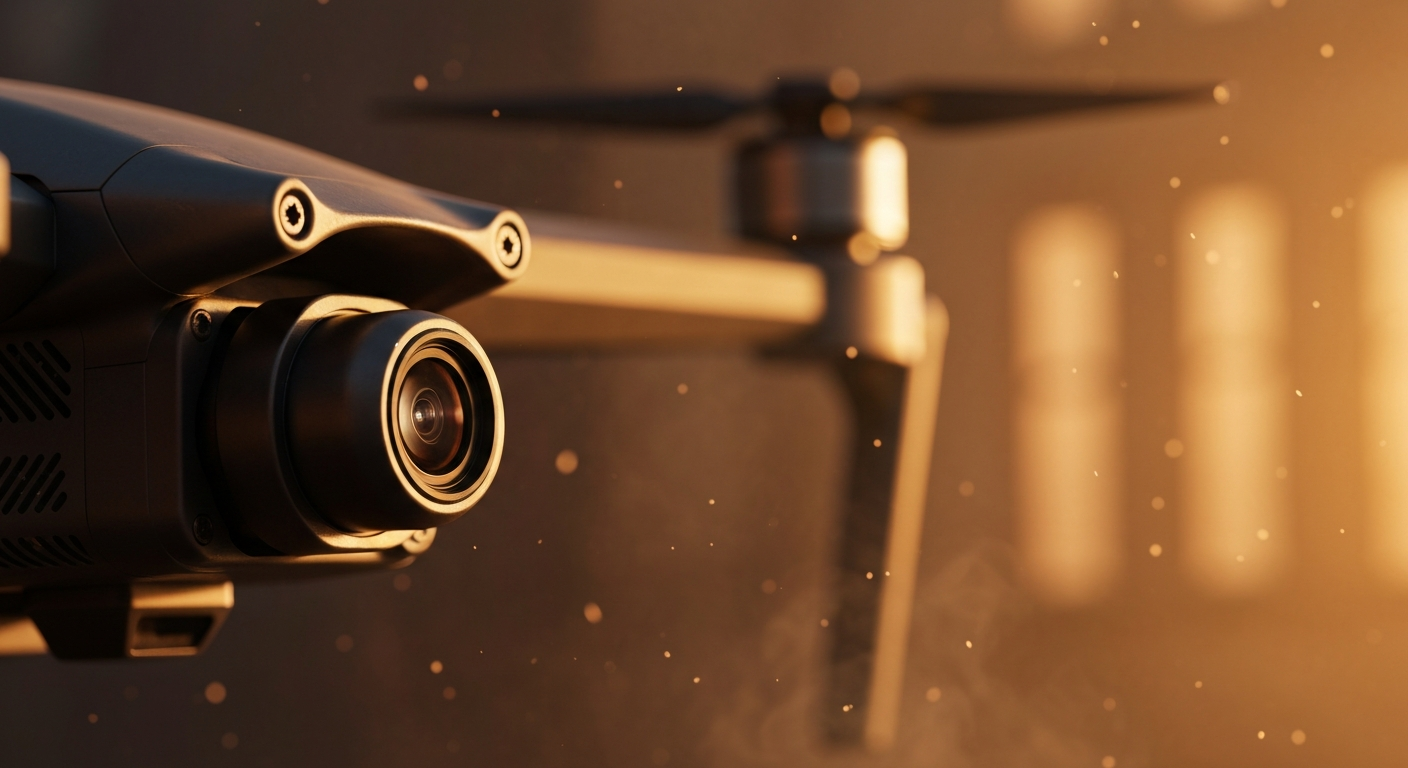
Drones are already being equipped with powerful high-resolution cameras, much like your smartphone camera but far more detailed, and infrared cameras, which act like heat vision goggles. These cameras can swiftly survey your home's exterior, gathering an incredible amount of visual and thermal data from safe distances. Think of it like giving your home a full medical scan, but from the air.
This isn't just about pretty pictures. The drone's data feeds into sophisticated computer programs that use photogrammetry, a technique that stitches together thousands of overlapping photos to create an incredibly accurate 3D model of your building, much like a digital twin. Once this detailed 3D blueprint exists, specialized algorithms and artificial intelligence then get to work. They can identify features like the size of your windows compared to your walls (the window-to-wall ratio) and even discern the types of materials your house is made from, inferring its thermal properties.
From Aerial Scans to Smart Energy Plans
What happens after the drone completes its flyover? The collected data is processed through a smart workflow, often using techniques from geographic information systems (GIS), which are like digital mapping tools that understand real-world locations. Machine learning and deep learning algorithms—the same kind of clever programming that helps your phone recognize faces—are then employed to automatically build precise 3D models and extract critical features, like exactly where heat is escaping your walls and roof.
This automated process drastically cuts down the time and cost involved in traditional energy assessments. In a pilot study in a 39-building community within China’s Hot Summer Cold Winter (HSCW) zone, researchers demonstrated that this drone-based system could generate detailed energy models. Imagine turning a weeks-long manual effort into a process that could potentially take just a few hours, needing very little information beforehand. It’s like having a lightning-fast auditor for your entire neighborhood’s energy use, all from above.
The Biggest Hurdles and What’s Next
While the concept is exciting, several factors are still holding back widespread adoption. One challenge is ensuring the accuracy of the drone-generated models, especially when compared to meticulous manual measurements. Another is the need for more comprehensive "archetype libraries" of residential buildings—digital catalogs of common building types and their typical materials—to help the AI accurately predict how different homes lose energy. This is particularly crucial in diverse global regions, including China where this research took place.
Researchers are actively refining these frameworks, aiming for an even greater balance between automation and reliability. We’re talking about technology that could be widely available within the next 5 to 10 years, potentially allowing local energy companies or specialized service providers to offer these swift, non-invasive assessments. Imagine a future where understanding your home's thermal weaknesses is as simple as ordering a pizza, with the drone being your delivery service of invaluable data. (/article/computers-are-already-building-your-future-energy)
Your Future Home: Smarter, Cheaper, Cleaner
The impact on your daily life could be huge. Knowing exactly where your home is inefficient means you can target upgrades much more effectively. Instead of guessing, you’ll have a precise heat map telling you if your old windows are the problem, or if your attic insulation needs a serious boost. This not only leads to significant savings on your heating and cooling bills, but it also means a more comfortable home for you and your family.
Beyond your wallet, this technology plays a crucial role in reducing your carbon footprint. Buildings are major energy consumers, and by making them more efficient, we significantly cut down on the demand for energy production, which often relies on fossil fuels. (/article/your-power-could-flow-without-any-waste) This drone-powered shift toward smarter home energy could quietly reshape our communities, making them both more sustainable and more affordable, one roof at a time. It’s a testament to how even subtle advancements in technology can lead to big changes for everyone.
Key Takeaways
- Drones equipped with infrared and high-resolution cameras can create detailed 3D models of homes, precisely identifying energy waste areas like insulation gaps or leaky windows.
- This automated drone system significantly reduces the time and cost of traditional energy audits, making large-scale energy efficiency assessments feasible for entire communities.
- By pinpointing energy leaks, homeowners can make targeted upgrades, leading to substantial savings on utility bills, increased comfort, and a reduced carbon footprint.
Frequently Asked Questions
What is drone energy modeling for homes? It's a system using drones with special cameras and AI to scan buildings from the air, creating 3D models and identifying where homes are losing heat or cool air to improve energy efficiency.
How do drones detect energy waste? Drones use infrared cameras, which sense heat, to create thermal images. These images show hot spots where heat is escaping in winter or entering in summer, pinpointing insulation gaps or leaky windows.
When can I expect this technology for my home? While in advanced development, widespread commercial services for drone-based home energy modeling are likely 5 to 10 years away, as researchers refine accuracy and automation.
Editorial note: The scientific findings presented in this article are sourced exclusively from published research papers, peer-reviewed studies, certified inventions, and registered patent filings. Images generated by AI.
Stay ahead of the curve
The science that shapes tomorrow — in your inbox every week
The scientific findings presented in our articles are sourced from published research papers, peer-reviewed studies, certified inventions, and registered patent filings. Subscribe for focused weekly coverage, hands-on explainers, and practical insights that help you stay curious — no jargon, no noise.
By subscribing, you agree to receive newsletter and marketing emails, and accept our Terms of Use and Privacy Policy. You can unsubscribe anytime.
Solar Innovation, Batteries & Grid Technology
Energy journalist covering the technologies quietly replacing fossil fuels — faster than most people realise.
View full profile →