Your Brain Scans May Predict Sadness Treatments
Imagine knowing which depression therapy will actually work for you before you even start. New research uses brain scans to predict treatment outcomes for sadness, potentially saving months of wasted effort.
For someone struggling with sadness, the wait to find the right treatment can feel endless. You try one therapy, hope for the best, and then often face the crushing disappointment when it doesn't work, sending you back to square one. But what if a quick look at your brain could tell you which path to take, almost like a mental compass?
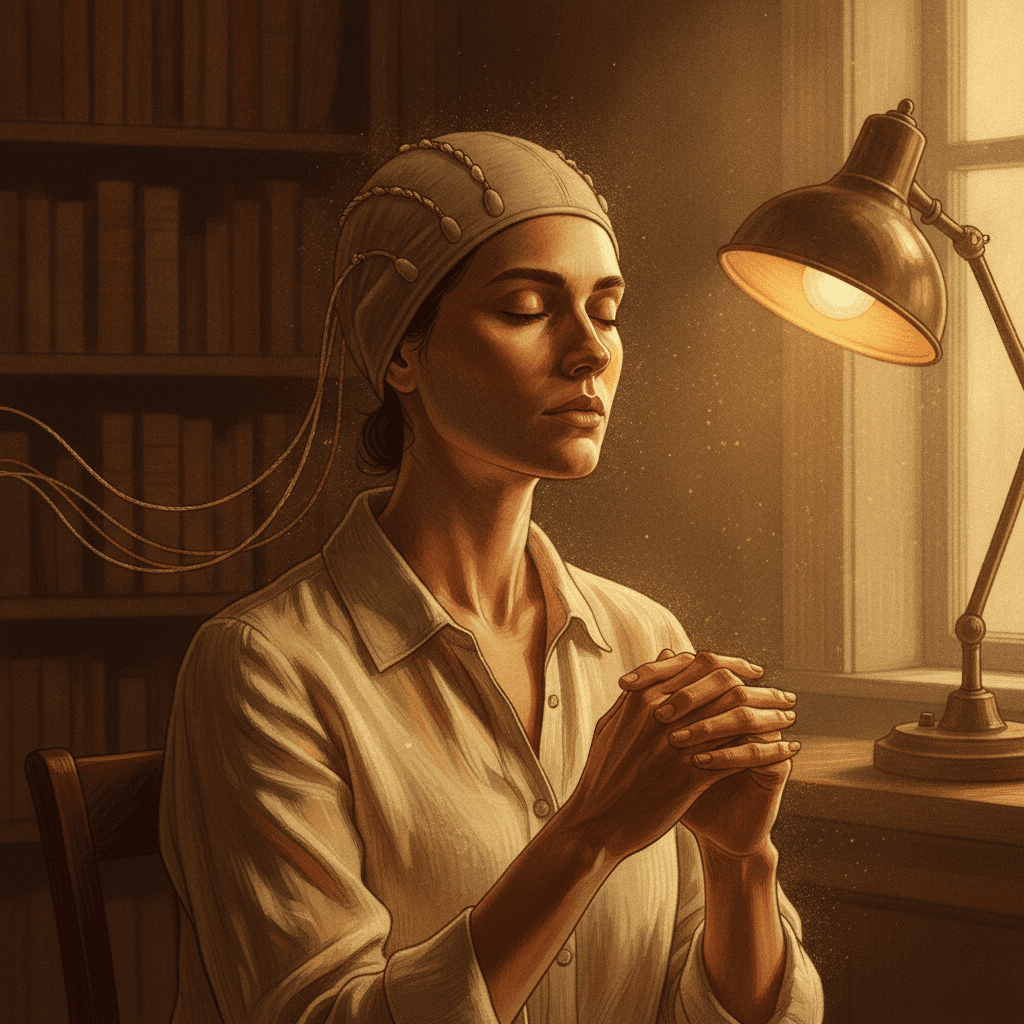
This isn't just wishful thinking anymore. Researchers are developing ways to peek inside your brain using electroencephalogram (EEG) scans – those caps with electrodes that look like swim caps covered in wires – to forecast whether a specific treatment for sadness, called repetitive transcranial magnetic stimulation (rTMS), will be effective. Essentially, they're trying to find a clear pattern in your brain activity, much like reading tea leaves, but with much more science involved.
Finding Hidden Clues in Brain Waves
The core idea here is that your brain isn't a blank slate; it has unique electrical signatures. An EEG records these tiny electrical signals that brain cells, called neurons, use to communicate, similar to how a seismograph records tremors from an earthquake. By analyzing these electrical patterns, scientists hope to spot subtle differences that indicate how your brain might respond to therapies.
Repetitive transcranial magnetic stimulation (rTMS) is a non-invasive treatment where a doctor places an electromagnetic coil near your scalp. This coil generates magnetic pulses that painlessly stimulate nerve cells in your brain, specifically in areas linked to mood control. It's like jump-starting a sluggish car battery, but for your brain's mood circuits.
The challenge is that everyone's brain is a little different, like snowflakes. Because of this variety, picking up clear signals from standard EEG data alone is tough, almost like trying to hear a specific conversation in a crowded room.

Combining Brain Signals for Better Predictions
To overcome this, researchers at the University of Houston, including graduate student Alisha Durani and supervised by Professor Jose Luis Contreras-Vidal, have been exploring clever "fusion techniques." Think of it like a chef combining different ingredients to make a richer, more complex flavor. Instead of just looking at one type of brain signal, they're blending multiple types of data from the EEG scans.
One method they call "montage" fusion is like overlaying several transparent images of your brain activity on top of each other. Each image highlights a different aspect of the electrical signals, and when combined, they create a more complete picture, revealing patterns that might be invisible on their own. Another technique, "blending," is akin to merging different colors on a canvas to create a new shade, extracting richer features from the data.
They then feed these combined brain images into a custom convolutional neural network (CNN). This is a type of artificial intelligence designed to recognize patterns in images, much like how your own brain learns to recognize faces or objects. The CNN sifts through the complex brain data, searching for correlations between specific brain activity and whether someone will respond to rTMS therapy. You might be surprised to learn that AI is also being used to build your better body parts in other medical fields.
Real Numbers and What They Mean
In preliminary work with a small group of 15 patients, their "Montage CWT_ST" fusion method achieved an impressive 99.90% accuracy in predicting rTMS outcomes when the AI was allowed to see parts of the same patient's data during both training and testing. On a larger, secondary dataset of 46 patients, this still hit 91.90% accuracy under the same conditions. This suggests the method is really good at finding patient-specific patterns.
However, science demands stricter tests. When they used a "subject-disjoint" approach – meaning the AI never saw any data from a patient it was later asked to predict – the performance dropped. This is a common hurdle in AI development, as it ensures the model isn't just memorizing individual patients but truly understanding general patterns. The best subject-level result under these tougher conditions still reached an AUC (a measure of a model's ability to distinguish between classes) of 0.874 with 82.7% accuracy for the "Montage CWT_ST" on the smaller primary group.
While the higher accuracy numbers grab attention, the most rigorous tests show there's still work to do before this is ready for your doctor's office. This is typical for early-stage research; it provides a strong foundation and direction for future efforts, but real-world application is likely more than 10 years away. It highlights the vast difference between research lab results and what's available in clinics.
Beyond Just Treating Sadness
If these predictive methods mature, the impact would be huge. You could potentially avoid months of ineffective therapy, saving precious time, emotional energy, and resources. Knowing in advance which treatment is most likely to help could streamline care for people with mental health conditions.
Beyond just depression, this approach could extend to other neurological conditions. Imagine identifying early signs of memory decline or even predicting how your robots finally understand what you want by studying complex brain signals. The ability to decode what our brains are trying to tell us opens doors to truly personalized medicine, tailored to your unique biology. It’s a compelling vision of how technology could make our inner worlds a little less mysterious.
The real wonder here isn't just about treating sadness; it's about giving us a clearer window into the incredible complexity of the human brain itself. This knowledge could even reshape how we understand consciousness and identity.
Key Takeaways
- New AI-powered techniques are learning to predict which depression treatments will work best for you using EEG brain scans.
- By combining different brain signal data, researchers can create a richer picture for AI to analyze, much like blending colors for a clearer image.
- While promising, this research is still early, and real-world application for personalized treatment is likely over a decade away.
Frequently Asked Questions
What is rTMS therapy? Repetitive transcranial magnetic stimulation (rTMS) is a non-invasive treatment for conditions like depression. It uses magnetic pulses to stimulate specific areas of the brain to improve mood and function.
How does EEG predict treatment success? EEG records brain's electrical activity. Researchers use AI to analyze patterns in these signals, looking for unique "signatures" that show how an individual's brain might respond to specific therapies like rTMS.
When will this be available in clinics? This research is still in its early stages, though promising. More rigorous testing and larger studies are needed before it can be used widely in clinics, likely more than 10 years from now.
Editorial note: The scientific findings presented in this article are sourced exclusively from published research papers, peer-reviewed studies, certified inventions, and registered patent filings. Images generated by AI.
Stay ahead of the curve
The science that shapes tomorrow — in your inbox every week
The scientific findings presented in our articles are sourced from published research papers, peer-reviewed studies, certified inventions, and registered patent filings. Subscribe for focused weekly coverage, hands-on explainers, and practical insights that help you stay curious — no jargon, no noise.
By subscribing, you agree to receive newsletter and marketing emails, and accept our Terms of Use and Privacy Policy. You can unsubscribe anytime.
Biotech, Genetics & Precision Medicine
Biotech correspondent following the genetic revolution reshaping how disease is diagnosed and treated.
View full profile →