I've Always Wondered Why Sleep Helps Anxiety. Now I Know.
You know that feeling when you're stressed and just can't shut your mind off? We've all been told to "just get more sleep," but it's never that simple. What if your brain has a secret "quiet switch" that deep sleep flips to calm your anxiety?
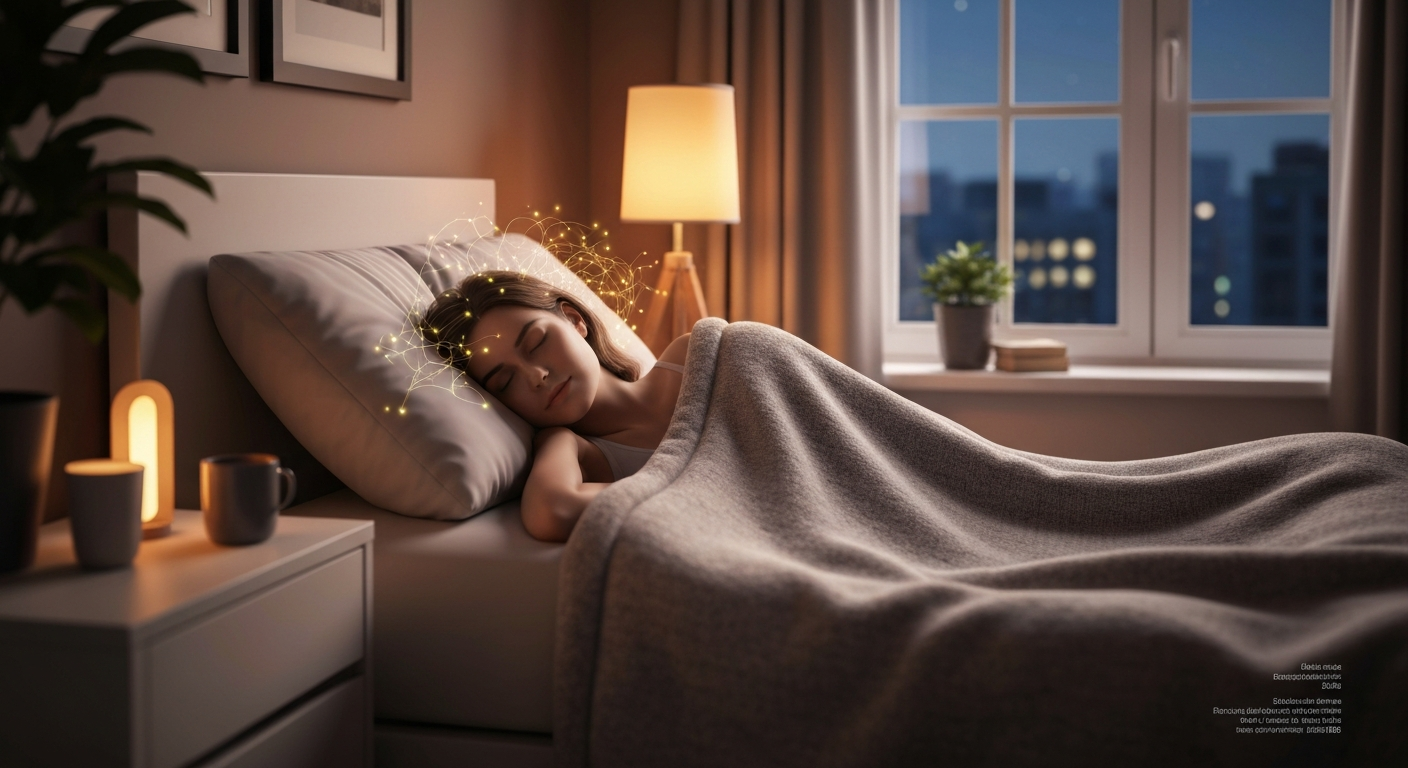
You know that wired, restless feeling. Your to-do list is swirling, tomorrow’s challenges loom large, and despite your best efforts, sleep feels miles away. Even when you do drift off, you wake up still tense, still burdened by the same anxieties that plagued you before bed. It’s a frustrating cycle, and for years, I've wondered why something as fundamental as sleep can feel so elusive precisely when you need it most.
We’ve all heard the advice: "Just get more sleep." And, anecdotally, we know it helps. A good night's rest can make a molehill out of yesterday's mountain. But what exactly is sleep doing to our anxiety? It’s not just a pause button. Your brain is a complex place, and the actual mechanics of how it processes and reduces stress during sleep have always felt like a mystery.
It turns out, there's a very specific reason. A team of researchers recently discovered a tiny, intricate circuit in your brain that slow-wave sleep — that super deep, restorative sleep stage — activates to actively dial down your anxiety. It's not just a general calming effect; it's a targeted attack on your stress response.
Your Brain's Secret "Quiet Switch" for Anxiety
Think of your brain like a bustling city at night. There are highways of information, bright lights of activity, and sometimes, a blaring "stress alarm" that just won't quit. This alarm, we now know, is largely controlled by a part of your brain called the lateral parabrachial nucleus, or LPB for short. When the LPB is active, it's essentially shouting, "Wake up! Be anxious!" and sending signals to another area, the oval bed nucleus of the stria terminalis (ovBNST), which acts like an anxiety amplifier, turning up your worry.
Now, imagine there's a hidden, tiny control room somewhere in the quiet corners of your city's brainstem. This control room, called the parafacial zone (PZ), has a secret "quiet switch" operator. When you enter slow-wave sleep — the deepest phase where your body truly recharges and your brain gets its best processing done — these PZ operators become super active.
What they do is clever: they flip the quiet switch, sending out "off" signals (carried by special calming molecules called GABA) directly to the LPB stress alarm. It’s like hitting a mute button on that noisy alarm. By silencing the LPB, the PZ prevents it from revving up your anxiety amplifier (the ovBNST). Suddenly, the city lights dim, the alarms quiet, and your anxiety starts to subside.
Why Just "Getting More Sleep" Isn't Enough (But Deep Sleep Is Key)
This isn’t about simply clocking more hours in bed. We often spend too much time in lighter sleep stages, tossing and turning, which doesn’t engage this specific anxiety-reducing circuit. The magic truly happens during slow-wave sleep. It’s during this profound quiet that your PZ acts like a skilled conductor, orchestrating the silencing of your brain's alarm system, making sure your anxiety response is systematically powered down.
The researchers even demonstrated this by using a fascinating technique called optogenetics. They could actually turn on the PZ's quiet switch with light in stressed animals. What happened? Not only did the animals immediately enter slow-wave sleep, but their stress-induced anxiety simply didn’t appear. It was prevented. This isn't just theory; it's a direct, observable intervention that proves this circuit's power. It’s like finding the exact wire you need to snip to defuse a ticking worry-bomb in your head.
This research fundamentally reshapes how we understand the "why" behind sleep's restorative power for mental health. For years, I’ve wondered if sleep just offered a temporary escape, or if it was truly fixing something deeper. Now, we have a clearer picture: it’s actively engaging a specific brain circuit to put a cork in your anxiety before it can even bubble up.
What This Means for You (And What's Next)
So, what does this mean for your struggles with anxiety and sleep? Right now, we’re not quite at the point where you can flip your own PZ switch with a thought. The optogenetic techniques used in the lab are for research, not human treatment yet. We're still years away, maybe a decade or more, from seeing this knowledge translate into direct human therapies like a precise medication or a non-invasive device.
However, this discovery gives us incredible clarity. It solidifies why prioritizing deep, slow-wave sleep is so crucial, especially when you're under stress. It also provides a clear target for future therapies. Imagine future treatments that could safely activate your PZ's quiet switch, helping those who struggle with anxiety get the targeted relief their brains crave, even if natural slow-wave sleep is hard to come by.
Until then, this new understanding reinforces the importance of everything we can do to promote slow-wave sleep: maintaining a consistent sleep schedule, creating a dark and cool sleep environment, avoiding screens before bed, and managing stress during the day. You're not just resting; you're actively engaging a powerful, built-in mechanism that silences your brain's anxiety alarms. Your body is already wired with the ultimate peace-keeper. It just needs the chance to do its job.

Editorial note: The scientific findings presented in this article are sourced exclusively from published research papers, peer-reviewed studies, certified inventions, and registered patent filings. Images generated by AI.
Stay ahead of the curve
The science that shapes tomorrow — in your inbox every week
The scientific findings presented in our articles are sourced from published research papers, peer-reviewed studies, certified inventions, and registered patent filings. Subscribe for focused weekly coverage, hands-on explainers, and practical insights that help you stay curious — no jargon, no noise.
By subscribing, you agree to receive newsletter and marketing emails, and accept our Terms of Use and Privacy Policy. You can unsubscribe anytime.
Health & Biomedical Innovation
Science journalist and former biomedical researcher covering the frontiers of medicine.
View full profile →